Updated for 2026. Most Ontario winter outages last less than four hours, but a serious ice storm can leave a Brampton or Caledon home dark for days. Preparing properly — backup power, surge protection and a household plan — typically runs $1,500 to $12,000 depending on how much of your home you want running. Here's what I install for my own family, and what it costs.
What actually causes winter outages in Ontario
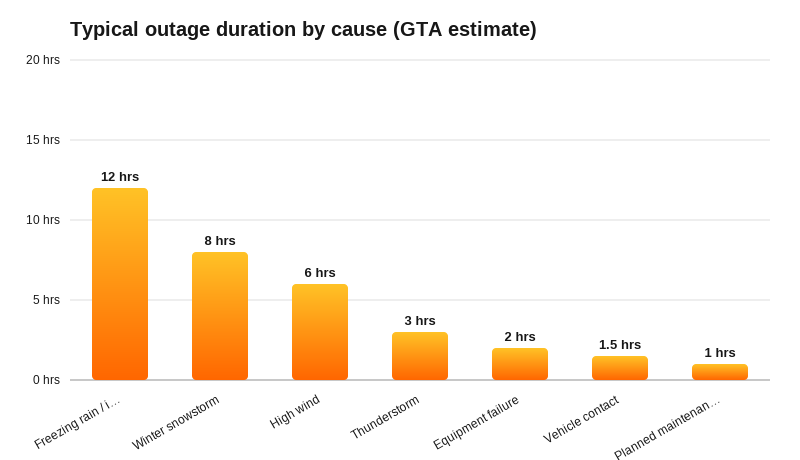
I've watched the outage maps across the GTA for over twenty years, and the pattern barely changes. Freezing rain and ice accretion bring down lines and poles across wide areas; high wind drops branches and whole trees onto overhead lines; and winter snowstorms sag conductors until they fail. Summer thunderstorms cause shorter, more localized hits, and equipment failure or a vehicle hitting a pole is usually repaired within a couple of hours. The long tail belongs to ice storms — the ones that have hit Brampton, Mississauga and Caledon hard in past years left some streets out for more than a week. Plan for the ice-storm scenario and every shorter outage takes care of itself.
Backup power: portable vs standby generators
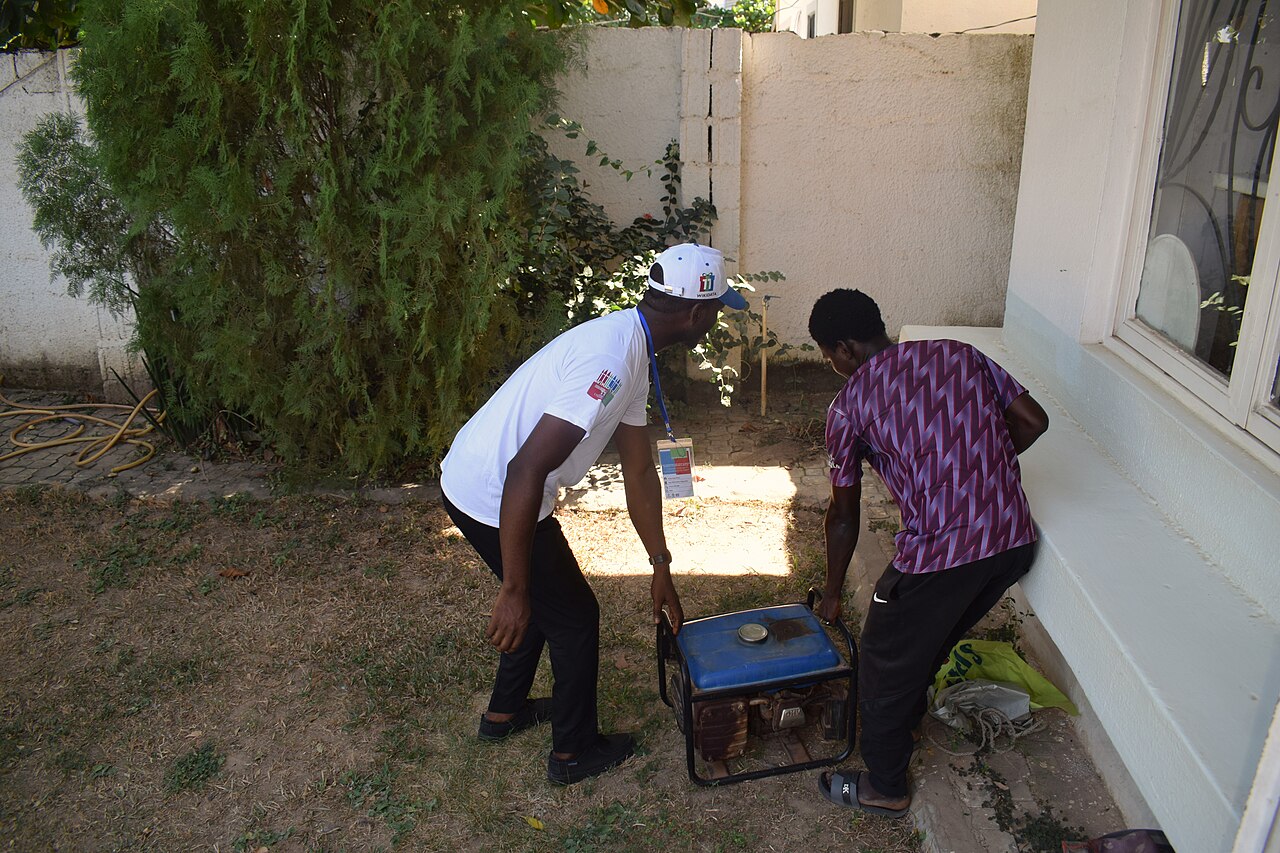
This is the decision that matters most. A portable generator paired with a properly installed interlock kit or transfer switch is the affordable path: heat, fridge, some lights and a handful of outlets for a realistic all-in cost of $1,200–$3,500. A standby generator starts itself within seconds and can carry the whole home, including air conditioning, but installed cost runs $8,000–$20,000.
| Backup power option | Typical installed cost (CAD) | What it runs |
|---|---|---|
| Portable generator + interlock/transfer switch | $1,200 – $3,500 | Furnace, fridge, lights, select outlets; manual refuelling |
| Standby generator, 10–14 kW air-cooled | $8,000 – $12,000 | Essentials plus most of the home, auto-start |
| Standby generator, 18–26 kW | $12,000 – $20,000 | Whole home including central AC |
| Whole-home surge protective device (add-on) | $300 – $800 | Protects electronics from surges and flickers |
Either path, one rule is absolute: the connection to your panel must be done by a licensed electrical contractor with an ESA notification of work. A backfed breaker or "suicide cord" energizes the grid lines crews are working on — it has killed utility workers. Sizing is the other trap: your furnace blower draws a large startup surge, so a generator that's fine on paper can stall the moment the heat kicks in. We size standby systems from actual load measurements, not guesses. Our generator installation work covers sizing, pad, transfer equipment, fuel connection coordination and the ESA inspection.
Surge protection and the Ontario rule most people miss
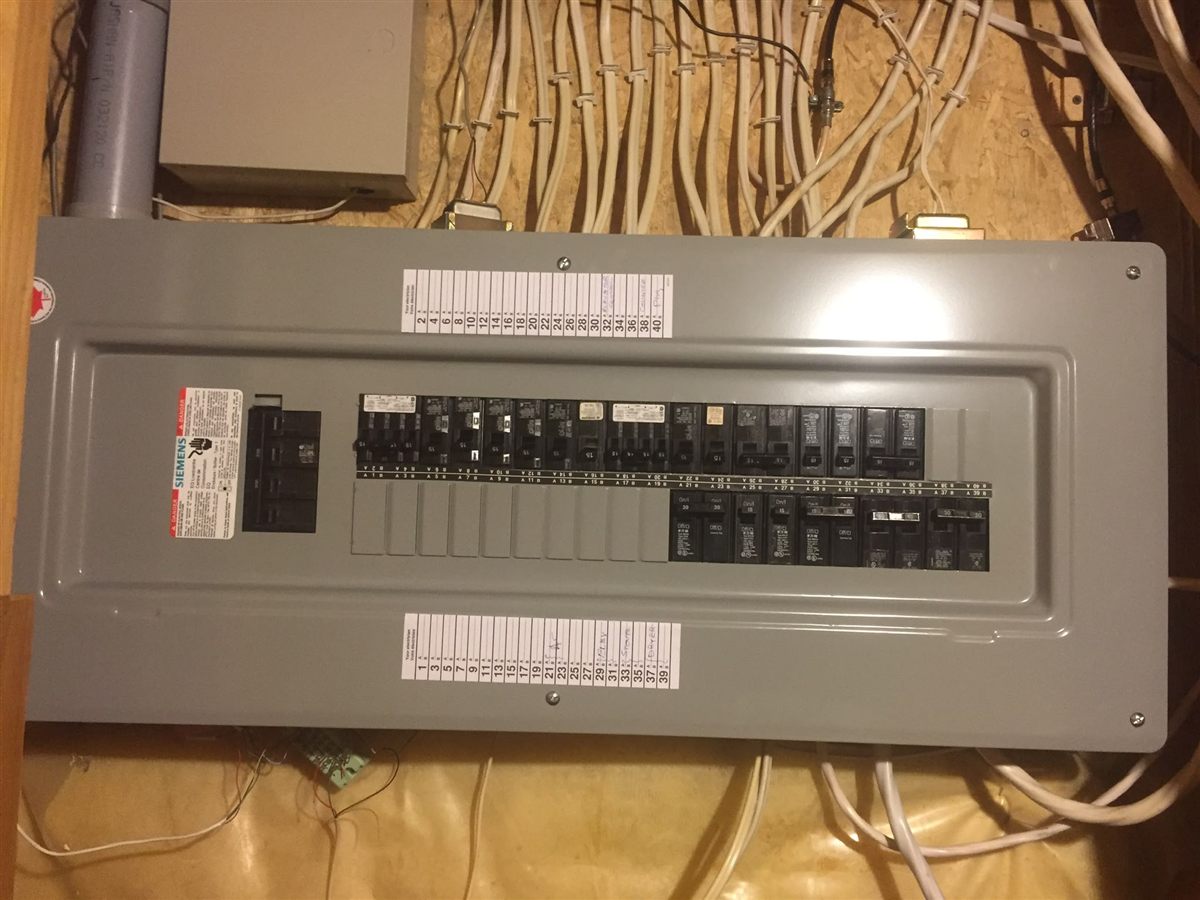
Since the 2018 Ontario Electrical Safety Code, a surge protective device is required when a new residential service is installed or an existing one is replaced — yet most older GTA homes still have none. Power rarely fails cleanly: it flickers, dips and spikes first, and those events quietly kill furnace boards, garage door openers and electronics. A whole-home SPD mounted at the panel costs $300–$800 installed, a fraction of one fried appliance. We include it in every whole-home surge protection job and in every service upgrade by default. Point-of-use power bars are a fine second layer, but they protect only what's plugged into them — your furnace, fridge and well pump are all unprotected without a panel-level device.
The preparation checklist I run in my own home
Before storm season, this is the list I'd walk any homeowner through:
- Know your critical loads. Furnace, fridge, sump pump if you have one, and one lighting circuit per floor. That list drives every sizing decision.
- Test the generator under load every fall — fuel goes stale, batteries die, and the first run of the year should not be during a storm.
- Check the panel age and capacity. A 60A or overloaded 100A service limits what any backup system can carry; a panel and service upgrade may need to come first.
- Add surge protection at the panel and keep point-of-use bars on sensitive electronics.
- Book an electrical safety inspection if your home is over 30 years old — an electrical safety inspection catches the weak connections that fail under storm load.
- Write down the plan. Where the generator connects, which breakers to turn on, where fuel is stored, and the utility outage number taped inside the panel door.
Rural properties in Caledon face longer restoration times simply because of line length and tree cover — if you're on a well, water is a critical load too, and that changes the generator conversation entirely.
Sources
- Hydro One — Power outages and storm centre
- Alectra Utilities — Outage information
- IESO — Ontario electricity system overview
- Electrical Safety Authority — Code and homeowner information
- Get Prepared — Government of Canada emergency planning
Questions homeowners ask me
How long do winter outages usually last in the GTA?
Most are under four hours — a branch on a line, a fuse, a transformer. The exceptions are ice storms and major wind events, where widespread damage can stretch restoration to several days. That's exactly why I recommend planning around a 48-to-72-hour scenario: if your home handles that, everything shorter is easy.
Is a portable generator enough for a GTA home?
For essentials, yes. A 3,000–5,000 watt portable unit with a transfer switch or interlock runs your furnace, fridge, freezer and some lights indefinitely as long as you have fuel. It will not run central air, an electric range or an EV charger. Whole-home comfort through a multi-day outage is standby territory.
Do I need a permit to connect a generator?
Yes — the transfer equipment or interlock connecting a generator to your panel is electrical work requiring an ESA notification and inspection in Ontario. A licensed contractor handles this as part of the job. Never backfeed a panel through a dryer outlet; it's illegal and lethal to line crews.
What does a standby generator cost to run during an outage?
A natural-gas standby unit burns roughly $30–$80 in gas per day under a typical household load — cheaper than hotel rooms and lost groceries during a three-day ice storm. Propane units cost a bit more to run and need a properly sized tank, which we plan for during the install.
Will a power outage damage my electronics?
Usually it's the surges and brownouts before and after the outage that do the damage, not the darkness itself. A panel-mounted surge protective device plus quality power bars on sensitive equipment covers both. After any major storm event, if your lights flickered hard, it's worth having your panel and surge devices checked.
If you want your home ready before the first real storm of the season, we offer free estimates across the GTA — call 416-903-7166 and we'll size the right backup power and surge protection for your home and budget.