Updated for 2026. A smart thermostat realistically saves 8–15% on the heating portion of an Ontario home's energy bills — that's $150–$400 a year for most households, with payback in one to three heating seasons. The size of the saving depends almost entirely on how your home is heated, and most marketing skips that part. Here's the real math.
The honest savings number
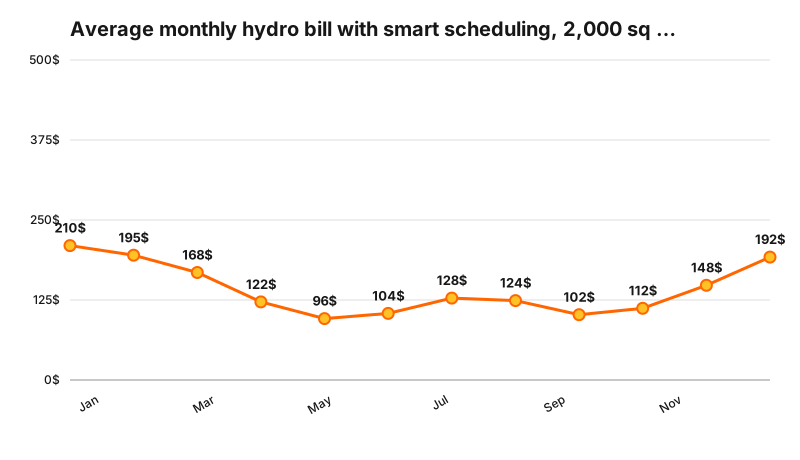
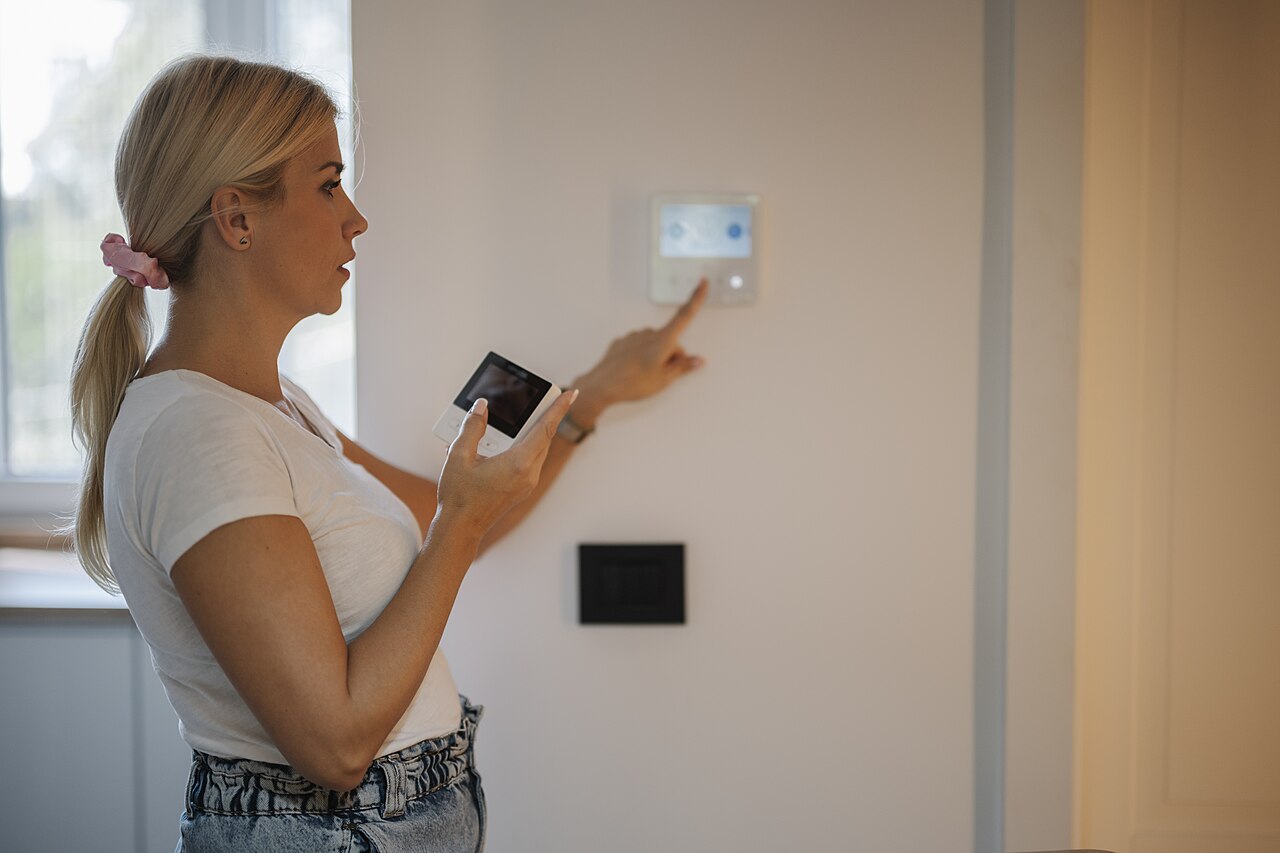
Natural Resources Canada's efficiency guidance consistently puts smart thermostat savings in the 8–15% range on heating energy, and my own clients' bills land in the same band. What that means in dollars: a gas-heated 2,000 sq ft home spending $1,800 a year on gas might save $150–$220. A home heated with electric baseboards on a $3,500 annual hydro bill could save $350–$500, because every degree of setback comes straight off electricity at Ontario residential rates. The thermostat does this one way — it stops paying to heat an empty house and dials back overnight automatically, without relying on anyone's memory. Set-and-forget schedules plus geofencing do most of the work; the fancy reports are a bonus. The chart below shows what a typical GTA hydro bill looks like across the year once smart scheduling is running.
Gas furnace homes: steady, modest savings
For forced-air gas heat, the thermostat controls both the furnace and the blower, and savings come from setbacks — typically 3–5 degrees overnight and while the house is empty. One honest caveat: modern high-efficiency furnaces take longer to recover from deep setbacks, and heat pumps (more on those below) lose efficiency recovering, so we program moderate setbacks rather than aggressive ones. The sweet spot for most Ontario gas homes is about 17–18 degrees overnight, 21 when occupied. The Wi-Fi wiring note matters here too: most smart thermostats need a common wire (C-wire) for reliable power, and older furnace installations in Brampton and Mississauga sometimes lack one — it's a quick fix for a licensed electrician, and I always check before quoting a thermostat swap.
Electric baseboard heat: big savings, bigger caveats
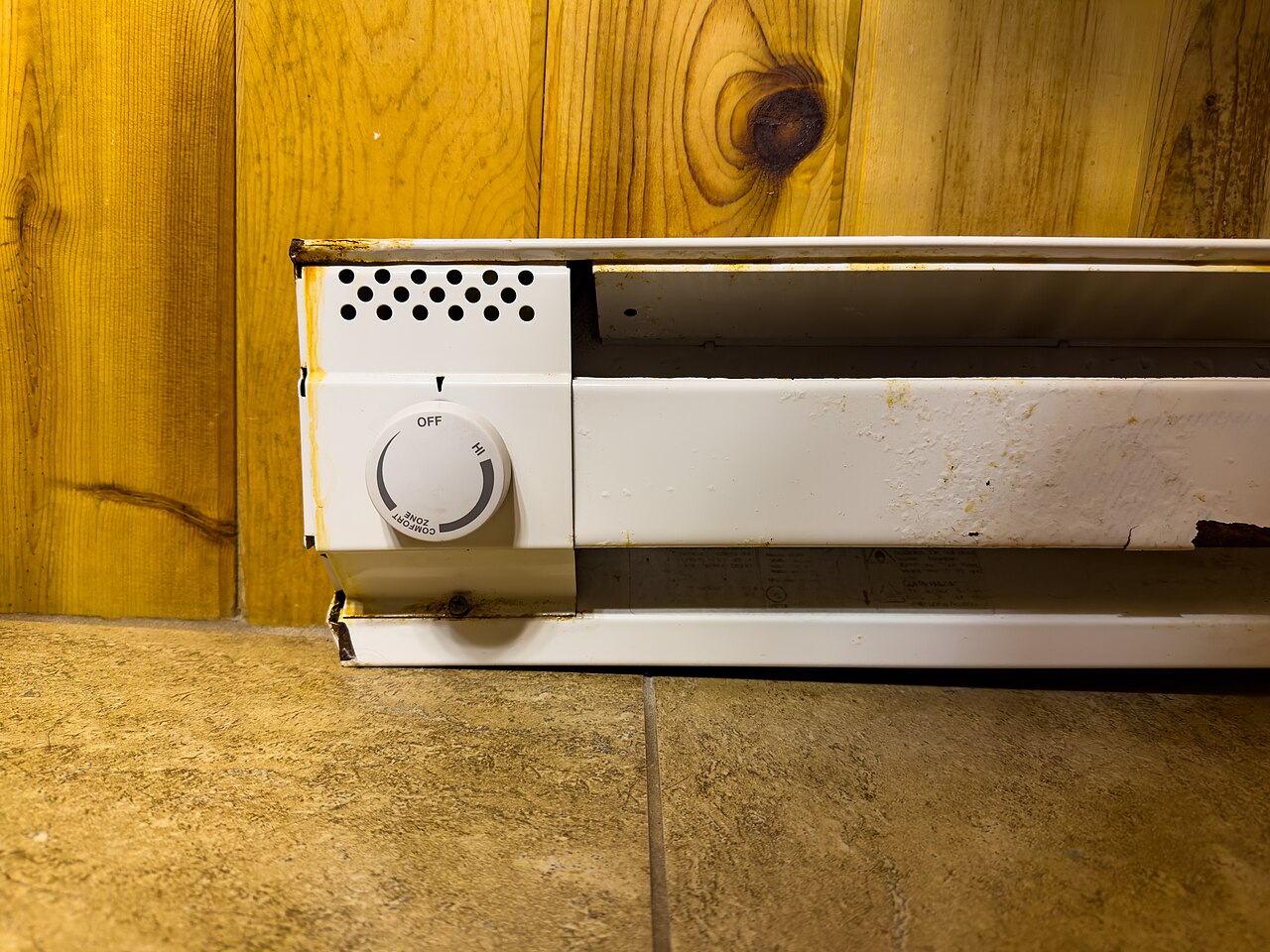
This is where the numbers get serious. Baseboard heaters convert every dollar of hydro directly to heat, so every setback hour is a real dollar saved — and line-voltage smart thermostats (Mysa and similar) bring proper scheduling to rooms that ran on twist dials for decades. A whole-home baseboard setup with per-room control can deliver the top of the savings range. The caveats: you need one thermostat per zone, 240-volt line-voltage wiring is genuinely different from low-voltage furnace control, and mixing the two up is a classic DIY mistake with real consequences. Our baseboard heater thermostat upgrades cover the load calculation, per-zone scheduling and safe line-voltage work — and pairing room-by-room control with smart home automation lets the whole house follow one 'goodnight' scene.
What a smart thermostat install costs in Ontario
Honest installed pricing for 2026:
| Job | Typical cost (CAD, installed) |
|---|---|
| Smart thermostat swap, C-wire already present | $250 – $400 (unit included) |
| Swap plus C-wire or power-kit addition | $350 – $550 |
| Line-voltage baseboard thermostat (per zone) | $200 – $350 |
| Whole-home baseboard smart control (4–6 zones) | $900 – $1,800 |
Factors that affect price: number of zones, whether new wiring is needed between the furnace and thermostat, and the model — a $150 thermostat and a $350 one both schedule, but the pricier units add remote sensors and better humidity control. At $200–$400 annual savings, even the larger jobs pay back in a few winters.
Time-of-use, and when the thermostat doesn't matter
Ontario's time-of-use rates reward shifting load off the 7–11 a.m. and 5–7 p.m. peaks. A smart thermostat helps if you heat electrically — pre-warming the house during off-peak and coasting through peak hours is a real strategy. But two honest limits: for gas heat, the thermostat barely moves your hydro bill at all, and no thermostat fixes a poorly insulated house or undersized equipment. If your bills are high and the home is drafty, seal and insulate first — then let the thermostat harvest what's left. And if you're on a tiered or ultra-low overnight plan, check your actual rate structure before programming around peak times, because the best schedule depends on your specific billing. When clients show me a year of bills, the homes that save the most are almost never the ones with the fanciest thermostat — they're the ones whose schedules actually match when the house is empty.
Sources
- Natural Resources Canada — Energy efficiency
- Ontario Energy Board — Electricity rates and billing
- IESO — Independent Electricity System Operator
- Hydro One — Rates and charges
Smart thermostat FAQs
Do smart thermostats work with baseboard heaters?
Yes, but only line-voltage models rated for 240V — standard low-voltage smart thermostats will fail dangerously on a baseboard circuit. Brands like Mysa are built specifically for this. One unit controls one zone, so whole-home control means one per room.
How much does a smart thermostat save per month in Ontario?
Realistically $12–$35 a month off heating costs: less for gas homes, more for electric heat. The honest range from NRCan and our client data is 8–15% of heating energy. If someone promises you 30%, ask to see their math.
Will a smart thermostat work without a C-wire?
Often yes, via a power-stealing kit or add-a-wire module, but reliability varies by furnace. If your thermostat box has no common wire, we test compatibility first — it's a fifteen-minute check that prevents the 'blank screen at 2 a.m.' problem mid-January.
Is it worth it for a heat pump?
Yes, with one nuance: heat pumps are most efficient holding a steady temperature, so we program smaller setbacks — usually 1–2 degrees — rather than the aggressive ones that suit gas furnaces. You still save, just from smarter scheduling, not deep setbacks.
Can I install a smart thermostat myself?
Low-voltage furnace thermostats are within confident DIY reach if you photograph every wire first. Line-voltage baseboard work is different — 240 volts doesn't forgive mistakes, and the ESA notification requirement applies. When in doubt, a pro install is $150–$300 of labour and it comes programmed.
Get the math done for your home
Tell us how you heat, what your last hydro or gas bill ran, and we'll give you a straight payback estimate — then install it properly if the numbers make sense. Free estimates across the GTA: call 416-903-7166 or request a quote online.