
“Irshad and his team installed potlights throughout our main floor, hooked up our new appliances and added under-cabinet lighting in the kitchen. Clean, precise work and the ceiling patch lines are invisible. Everything was left spotless at the end of each day.”
Panel Upgrade & Service Upgrade in Brampton & the GTA
Updated for 2026. A typical 100 amp to 200 amp service upgrade in Brampton costs $3,500–$6,500 all-in — new panel, ESA permit, inspection and utility coordination included. Fuse-to-breaker conversions start around $2,200, and adding a sub-panel runs $1,500–$3,500. The honest ranges below reflect real GTA jobs, not teaser pricing.
A service upgrade replaces the equipment that brings power from the street into your home — the meter base, service mast or underground conduit, main breaker and distribution panel — with a modern, properly sized and safely protected system. A panel upgrade alone swaps the distribution equipment while keeping the same service capacity. Confusing the two is common, and the distinction matters for pricing: a service upgrade involves your utility and the weatherhead on your roof; a panel swap doesn't. We assess which one your home actually needs and quote accordingly — half the "panel upgrade" quotes floating around GTA contractor boards are really service upgrades priced by people who don't understand the difference.
When Your Home Needs a Service or Panel Upgrade
Most upgrades in our calendar are triggered by one of these situations:
- An EV charger — a Level 2 charger adds a continuous 32–48 amp load; most 100-amp services can't absorb it. We run the load calculation during your EV charger estimate.
- A hot tub, pool or sauna — another heavy continuous load, often the straw that breaks a 100A service.
- An addition or finished basement — new square footage means new circuits and new demand. See basement wiring and custom home wiring.
- Insurance requirements — fuse panels, Federal Pacific, Zinsco and certain other brands are declined or surcharged by many Ontario insurers. An upgrade usually resolves it outright.
- Aluminum branch wiring or knob and tube — flagged at insurance and resale; see knob and tube replacement for the full rewiring picture.
- Flickering lights, warm panels, tripping main breakers — symptoms of a service at its limit or equipment past its safe life.
60 Amp vs. 100 Amp vs. 200 Amp: Which Do You Need?
60-amp services survive in pockets of older Brampton, Mississauga and Toronto housing stock. They were sized for electric lighting, a range and little else. If your home is 60 amps, an upgrade to at least 100 — realistically 200 — is overdue; most insurers will not bind a 60-amp home at all.
100-amp services remain common and workable for modest homes without major electric loads — gas cooking and heating, no EV, no hot tub. The moment you add any one of those, a 100 amp to 200 amp upgrade usually becomes the right call, and the load calculation tells us definitively.
200-amp service is the modern Ontario standard and our default recommendation for any significant upgrade. It comfortably carries central air, an EV charger, a hot tub, a finished basement and a future automation or smart-home system simultaneously — with headroom for whatever comes next. Larger estates in Vaughan, Richmond Hill and Oakville sometimes warrant 320/400-amp services; we plan those from a real load schedule, not ego.
Fuse to Breaker Panel Upgrades
Fuse panels have two problems: capacity and behaviour. They're almost always 60- or 100-amp services, and homeowners defeat them — installing larger fuses on undersized wire (overfusing), or worse, pennies behind blown fuses. Both are genuine fire causes. A fuse to breaker panel upgrade replaces the entire assembly with a modern breaker panel featuring proper overcurrent protection on every circuit, AFCI/GFCI protection where required, and room for future circuits. It's the single most common upgrade we perform in GTA homes built before 1970 — including many in Downtown Brampton, Huttonville and Streetsville — and it's the one insurers ask about by name.
What the Upgrade Involves
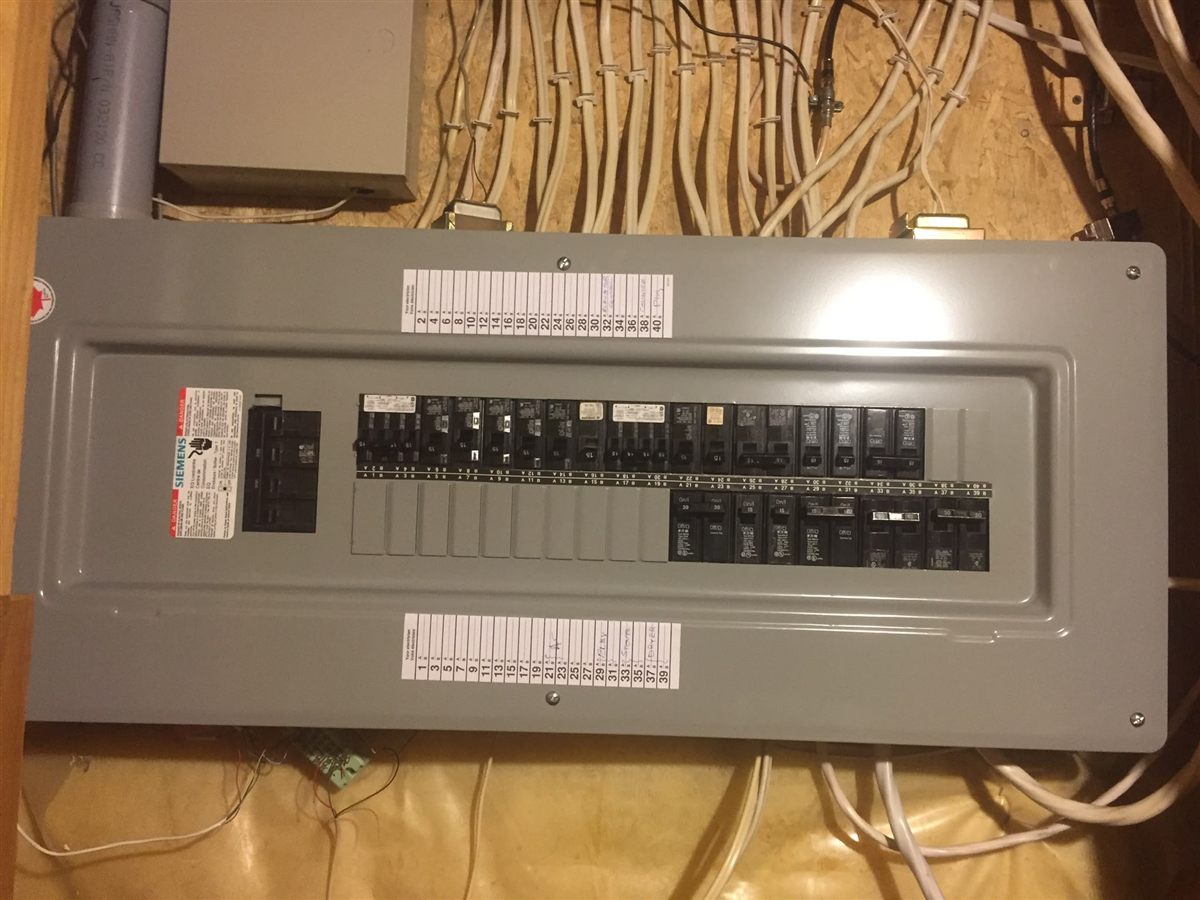
A typical service upgrade includes: the new panel (we install Siemens, Eaton and Square D by default, per your preference and availability), a new meter base where required, replacement of the service mast and weatherhead for overhead services (or conduit and cable for underground), grounding and bonding brought fully to current Ontario Electrical Safety Code, proper panel labelling with a full circuit directory, and — where the scope includes it — correction of substandard work found during the changeover. We also transfer your existing circuits, test every one, and verify nothing was left unprotected in the swap.
One detail homeowners appreciate: we photograph everything before and after, and we take old equipment away. Your insurance file gets a clean, documented upgrade — not a story.
ESA Permit, Inspection & Why a Licensed Contractor Matters
A service upgrade is among the most permit-intensive residential electrical jobs in Ontario: an ESA electrical permit is mandatory, the ESA inspects the work, and your utility must authorize the reconnection. Only a licensed ESA/ECRA electrical contractor can pull that permit and coordinate that sequence — and for good reason. This is the one job in residential electrical where a mistake involves the full available fault current of the grid upstream of your home, not just one circuit. Unlicensed "panel swaps" we get called to rescue routinely fail on grounding, bonding, meter-base violations and missing permits — each one a defect file (see our ESA defect correction work for how those get fixed, at whose expense).
Under ESA/ECRA #7004060, we handle the entire sequence: permit, utility disconnect authorization, installation, ESA inspection and reconnection. You get the certificate of inspection for your insurer — and, for upgraded services, it's often the document that unlocks better coverage on the spot.
Timeline: Usually One Day, Plus Utility Coordination
The physical work on a standard 200-amp upgrade takes one day — typically four to eight hours with power off. The total timeline from booking to reconnection is usually one to three weeks, driven by two external steps: the ESA permit (days, not weeks) and the utility's disconnect/reconnect authorization, which in Brampton and Mississauga is typically scheduled on the same day as our work. Most homeowners are without power for the working day only; we schedule early starts so you're reconnected before evening. Larger service sizes (320/400A), underground service conversions, or jobs bundled with rewiring extend the schedule — we give you the realistic timeline in the written quote, not the optimistic one.
Aluminum Wiring & Older Panels: Related Work to Plan Together
A panel upgrade is often the right moment to address neighbouring issues cheaply, because the circuits are being handled anyway. Homes from the late 1960s and 1970s across the GTA carry aluminum branch wiring, which insurers also flag; the standard remediation — Copalum crimps or approved connectors at every termination — is far more economical while a panel changeover is in progress. Similarly, if your upgrade was triggered by insurance concerns about knob and tube or a recalled panel brand, bundling the correction work under one permit and one inspection visit saves both money and weeks of scheduling. We flag these opportunities honestly during the assessment — including when the answer is "not yet," because upselling work a home doesn't need is how contractors lose the referrals our business is built on.
What Happens to Your Circuits During the Swap
Homeowners picture chaos; the reality is orderly. Every existing circuit is mapped and labelled before we begin, transferred one by one into the new panel, and tested under load before the cover goes on. Circuits we find in poor condition — open grounds, shared neutrals, improvised splices — are documented with photos and quoted for correction before reconnection, so there are no surprises after the inspector leaves. Your new panel closes with a complete, accurate circuit directory: the small detail that pays off at every future service call, renovation and home inspection.
2026 Cost of a Panel Upgrade in Ontario: Four Job Types
"Panel upgrade" covers four genuinely different jobs, and the price follows the job. Here's what GTA homeowners actually pay in 2026, permit and inspection included:
| Job type | When it's the right call | Typical 2026 range (CAD) |
|---|---|---|
| 100→200 amp service upgrade | EV charger, hot tub, addition, or aging 100A service | $3,500 – $6,500 |
| Fuse to breaker panel conversion | Insurance requirement, safety upgrade at 60–100A | $2,200 – $4,000 |
| Sub-panel installation | Finished basement, suite, garage or hot tub at a distance | $1,500 – $3,500 |
| Same-amp panel swap | Recalled or damaged brand (Federal Pacific, Zinsco) at 100–200A | $1,800 – $3,500 |
Underground service conversions, 320/400-amp services and jobs bundled with rewiring are quoted individually — the variables multiply too quickly for honest ranges.
Six Cost Drivers Behind Every Quote
Two identical-looking quotes can legitimately differ by $2,000. These are the six variables doing the work:
- Overhead vs. underground service. Underground conversions involve trenching or new conduit runs and typically add $1,000–$3,000.
- Panel brand and breaker spaces. A 40-space Siemens, Eaton or Square D panel with AFCI/GFCI breakers costs more than a bare-bones unit — and protects more.
- Mast, meter base and weatherhead condition. Corroded exterior equipment discovered mid-job is the classic change-order trigger; we price it after inspection, upfront.
- ESA permit and inspection fees. Ontario's electrical permit for a service upgrade runs $200–$450 depending on scope — always included in our quotes, always passed on a certificate.
- Alectra meter-base coordination. In Brampton, Alectra Utilities authorizes service changes and specifies meter-base requirements; their scheduling and any service-damage or reconnection charges factor into timing and cost.
- Circuit corrections during transfer. Open grounds, shared neutrals and improvised splices found when circuits move into the new panel are documented and quoted — never silently buried.
Alectra, Meter Bases & Utility Coordination in Brampton
Brampton's electricity distributor is Alectra Utilities, and any service upgrade touching the meter requires their involvement: authorization before we begin, their meter-base specifications (type and location), and a scheduled disconnect/reconnect around our work day. We handle that coordination as a matter of routine — it's a defined line item in our process, not an improvisation. Mississauga properties fall under Enbridge's electricity operations, Vaughan and Richmond Hill under Hydro One and local utilities respectively, and we coordinate with each under the same discipline. Homeowners should budget for the utility's reconnection charges and treat any contractor who shrugs at "hydro coordination" as a warning sign: it's the step that separates a one-day upgrade from a week without power.
Panel Brands We Install — and the Ones We Replace
Our default panels are Siemens, Eaton and Square D — brands with full local parts availability, decades of support and breakers that trip when they should. On the other side of the ledger, we replace Federal Pacific (Stab-Lok) and Zinsco panels on sight: both have documented failure histories with breakers that fail to trip, and both are named by Ontario insurers. Fuse panels aren't recalled, but their capacity and overfusing habits put them in the same insurance conversation. If your panel is one of these, the upgrade conversation isn't upselling — it's the documented fix for a known hazard.
The Upgrade Day, Hour by Hour
Homeowners are often surprised how structured a service upgrade day is. The crew arrives early — utility disconnect is scheduled for morning. Hours one and two: old service equipment comes down, mast and meter base are assessed, new panel is set and fed. Hours three to five: grounding and bonding to current code, circuits transferred one by one, each tested. Mid-afternoon: ESA inspection, corrections if flagged (rare when the work is done professionally the first time). Late afternoon: utility reconnection, full-home test, and your certificate and photo record in hand. One day, start to finish — the two to three week timeline is permits and utility scheduling, not labour.
Partial Upgrade or Full Service Change? A Straight Answer
Not every home needs the full job. A sub-panel — a second distribution panel fed from your main — solves many capacity problems for $1,500–$3,500: finished basements, garages, hot tubs and backyard structures all make sense on their own panel with room to grow. But a sub-panel doesn't fix an underlying service that's simply too small; feeding a 60-amp service with more panels just redistributes the shortage. Our assessment tells you which your home is: homes with adequate service but a full panel get sub-panels, and homes whose total demand exceeds their service get honest 100-to-200-amp recommendations instead. The right answer is whichever one your load calculation supports — we show you the math either way.
How Long Does a 200 Amp Upgrade Take in 2026?
Benchmark your expectations: from signed quote to reconnection, most Brampton upgrades complete in two to four weeks — one to two weeks for the ESA permit and Alectra scheduling, one day on site, and the inspection the same afternoon. Rush timelines for sales or insurance deadlines are sometimes possible with utility cooperation; ask when you call and we'll tell you honestly what's achievable.
Why Homeowners Choose Bano Electrical Services Ltd
- 20+ years of service upgrades — thousands of panels across the GTA, from 60A fuse boxes to 400A estates.
- Licensed Master Electrician on every job — ESA/ECRA #7004060, insured and WSIB-covered, with the licence number on every quote and permit.
- Utility coordination handled — we book the hydro disconnect and reconnection around our work day, not yours.
- Fixed pricing — the quote covers permit, equipment, labour and reconnection; no surprise "extras" when the panel cover comes off.
- Documented for insurance — certificate, photos and circuit directory delivered at completion.
Wondering whether your home needs an upgrade? Call 416-903-7166 for a free assessment and load calculation, or book online. We serve Brampton, Mississauga, Vaughan and the entire GTA.