“Irshad and his team installed potlights throughout our main floor, hooked up our new appliances and added under-cabinet lighting in the kitchen. Clean, precise work and the ceiling patch lines are invisible. Everything was left spotless at the end of each day.”
Baseboard Heater & Thermostat Installation in the GTA
Electric baseboard heating is simple, silent and zone-friendly — each room heats independently, with no ductwork and no furnace. But "simple" describes the heat, not the wiring: baseboards run on 240 volts at amperages that demand dedicated circuits, correct breaker sizing and properly rated thermostats. The thermostat swap that looks like a five-minute job is the one where line voltage bites homeowners who assume it's like replacing a light switch.
240V Baseboard Heater Installation
Baseboards are sized to rooms, and their circuits are sized to the load — a typical formula allocates roughly 10 watts per square foot of space, adjusted for ceiling height, windows and insulation quality in real Ontario winters. From there:
- Dedicated circuits — each heater or heater group on its own circuit, with breaker sizing matched to the total load and wire gauge (typically 12/2 or 10/2 on 20- and 30-amp breakers).
- Proper placement — heaters under windows and along exterior walls where heat loss concentrates, clearances to furniture and drapes respected, kitchens and bathrooms following their own spacing rules.
- Safe terminations — 240V connections inside rated enclosures, no device-box improvisation, cable protection where runs are exposed.
For additions and sunrooms across Brampton and Mississauga — spaces ducted systems never reach well — baseboards are often the smartest heat source, and we size them against a real load picture rather than a guess.
Line-Voltage vs. Low-Voltage Thermostats
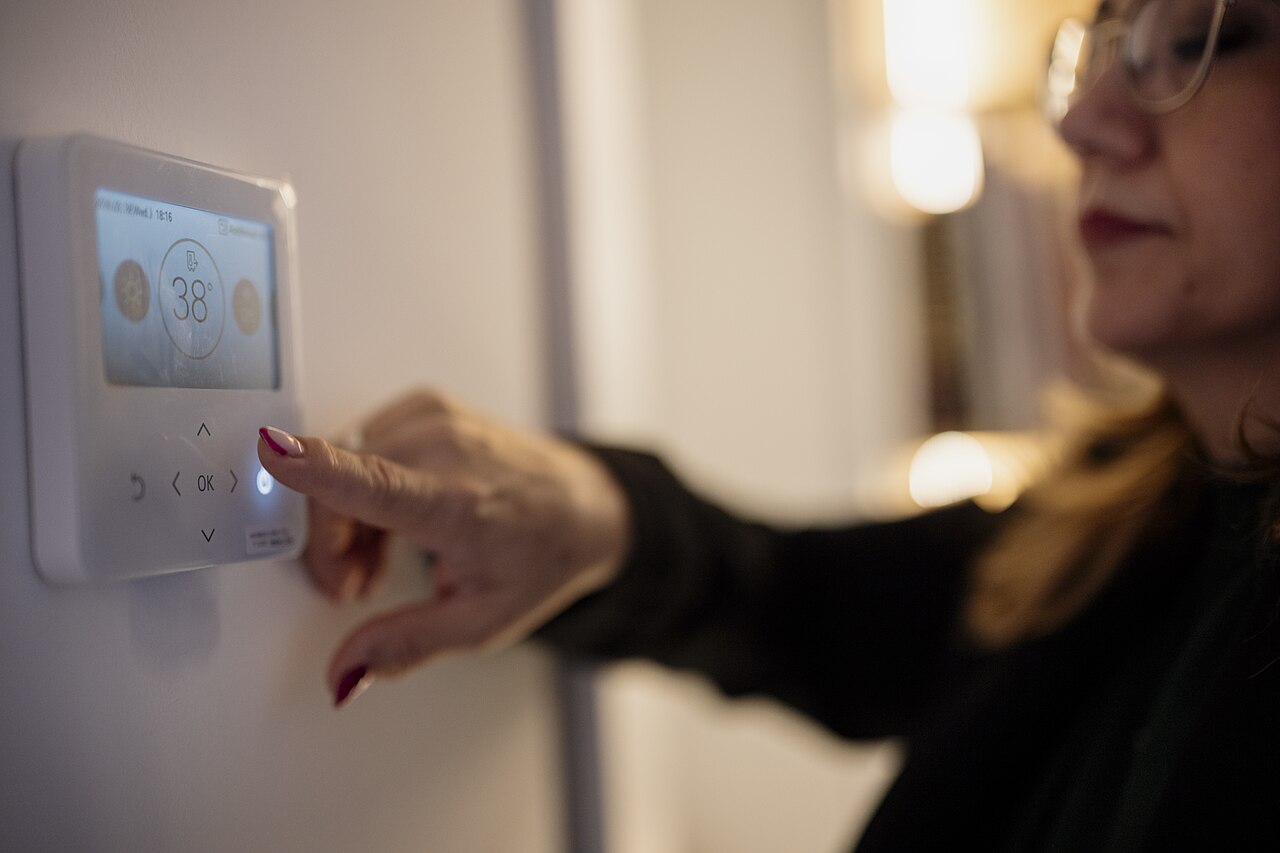
This distinction trips up nearly every first-time buyer: baseboard heaters run on line voltage (240V), and their wall thermostats switch that full load. Furnace and heat-pump systems use low-voltage (24V) thermostats like Nest or Ecobee. They're not interchangeable — installing a 24V smart thermostat directly on a 240V baseboard circuit will destroy it, dangerously. The right tools for smart control of electric heat are line-voltage smart thermostats (brands like Mysa and Sinope are the Canadian standards) or approved relays and adaptors designed for the application. We specify correctly, and where a home mixes systems — furnace plus baseboards — we integrate controls so each system does its job without confusion.
Smart Thermostat Installation
For conventional furnace, boiler and heat-pump systems, smart thermostats (Ecobee, Nest, Honeywell Home and the like) are straightforward upgrades we install routinely: we verify the C-wire or add a common-wire solution, confirm compatibility with your HVAC equipment (some older systems need adaptor modules), mount, configure and walk you through scheduling and app setup. The payoff is real in Ontario — smart setbacks and scheduling routinely save 10–15% on heating costs, and remote access means the cottage-minded can monitor a vacant property. For electric baseboards, as above, we install line-voltage smart thermostats per zone — same app convenience, correct hardware.
Heating Zones & Whole-Home Strategy
The quiet advantage of electric heat is zoning — but only if it's wired as zones. We plan baseboard circuits room by room so each space has independent control: bedrooms cooler overnight, the home office warm by 8 a.m., guest rooms off until needed. Combining electric zones with a primary furnace or heat pump takes a little strategy (which heat runs when, at what temperature handoff), and we design that overlap rather than letting it happen accidentally. Where homes are adding heat pump capacity through renovations, we re-balance electric zones to act as efficient backup — the pairing many GTA homes are moving toward.
Safety Notes
Two cautions worth stating plainly. First, 240-volt thermostats and heaters are not DIY-friendly territory: the wiring carries four times the punch of a standard circuit, and mistakes arc rather than tingle. Second, if a baseboard smells hot, shows discolouration, or a breaker trips repeatedly, that's a service call, not a nuisance — heater elements and connections age, and overloaded circuits are a leading winter fire cause in electric-heated homes. Our heater replacements and circuit corrections address both the device and its wiring, not just the symptom.
Condos & Rental Considerations
Heating control questions come up constantly in GTA condos and rentals. Condo thermostats are usually low-voltage fan-coil controls — a straightforward smart-thermostat swap in most buildings, though some corporations have rules about thermostat models or Wi-Fi devices, worth a quick check with property management. For landlords, we standardize thermostat and heater hardware across units so maintenance is predictable, and line-voltage smart thermostats let owners monitor vacant-unit temperatures remotely through an Ontario winter — cheap insurance against frozen-pipe claims that make insurer unhappiness legendary.
Why Homeowners Choose Bano Electrical Services Ltd
- Line-voltage fluency — 240V work by licensed electricians, with correctly rated devices throughout.
- Right thermostat, right system — low-voltage smarts for furnaces, line-voltage smarts for baseboards, never crossed.
- Honest zone design — heating planned room by room for comfort and cost.
- Licensed and documented — ESA/ECRA #7004060, fixed pricing, permits where circuits are new.
Cold room, aging heaters or ready for smart control? Call 416-903-7166 for a free quote, or book online. We serve Brampton, Mississauga, Vaughan and the GTA.