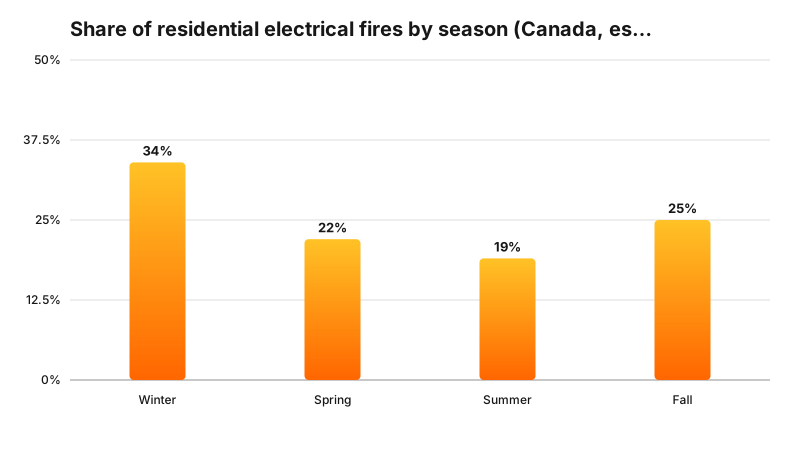
Updated for 2026. Roughly a third of Canada's residential electrical fires happen in the winter months, and heating equipment is the number-one driver. After 20+ years of winter service calls across the GTA, I can tell you the causes repeat every year: space heaters on overloaded circuits, panels pushed past their limit, and extension cords doing jobs they were never meant for. Here's the checklist I run in my own home every November, before the first deep freeze hits Brampton, Richmond Hill and the rest of the region.
Why winter is the hardest season on home wiring
Winter changes how your house uses electricity in two ways at once: demand goes up, and the equipment works harder. Furnace blowers, humidifiers and holiday lighting run for hours, while space heaters and electric baseboards add 1,500 watts at a time to circuits sized for a fraction of that. At the same time, cold makes copper contract and old insulation brittle — connections that were marginal in July become failure points in January. Statistics Canada's fire-loss data shows residential fires clustering hard into the heating season, and my own dispatch log matches it: electrical fault calls in January run roughly double a mild-October baseline. The chart below shows the seasonal split.
Space heaters and the 1,500-watt rule
The single most common winter call I get is a tripping breaker caused by a space heater. The math is simple: a typical plug-in heater draws 1,500 watts, which is 12.5 amps on a standard 15-amp circuit. One heater alone is fine. A heater plus a kettle, hair dryer or window air conditioner on the same circuit is not — you're near the breaker's limit, and if the breaker is aging or a connection is loose, heat builds at the outlet or inside the wall long before anything trips. The rules I give every family: one space heater per circuit; never run one on an extension cord (most household cords are rated well under 12.5 amps); never leave one running overnight or on a timer; and always plug heaters directly into a wall outlet in good condition. If a plug or the face of an outlet feels warm, that's not something to watch — it's something to fix, this week.
What winter really demands from your panel
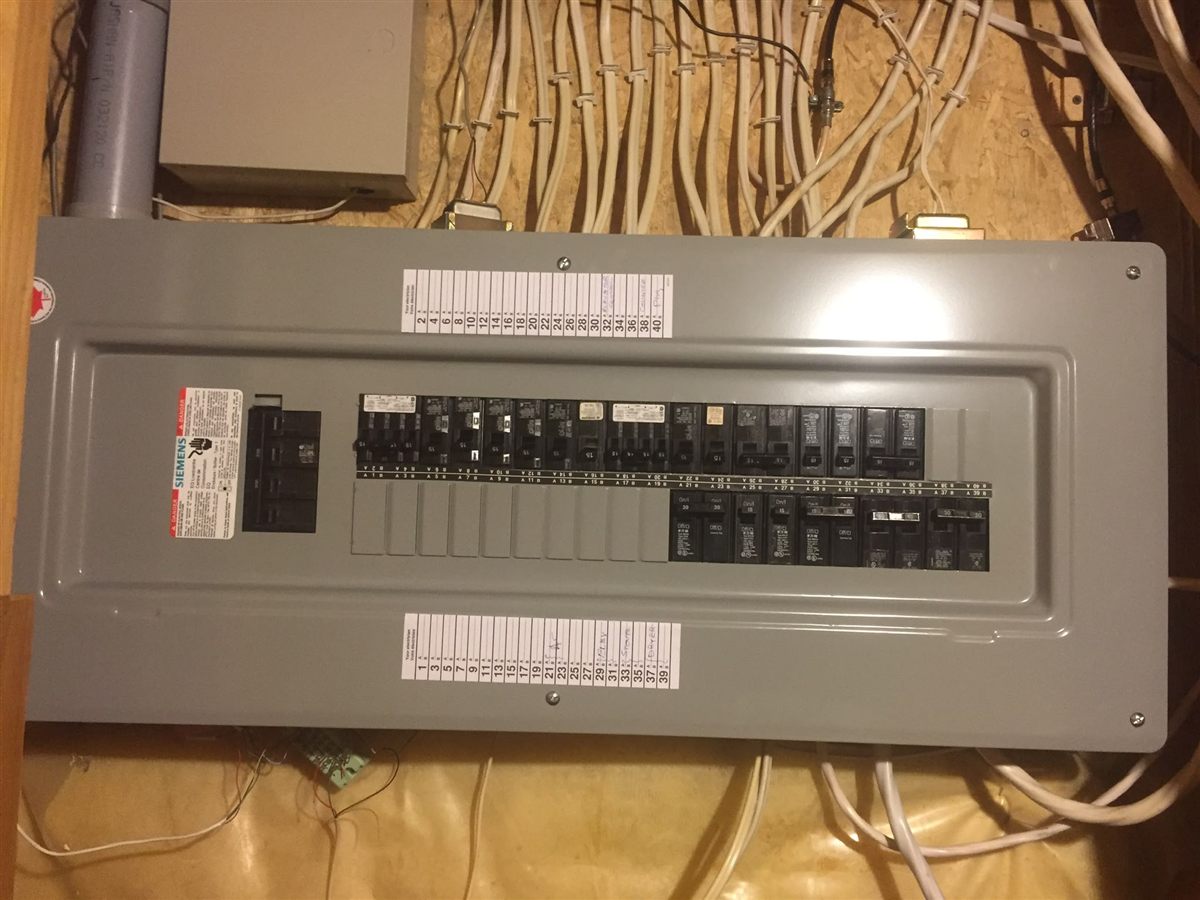
Your electrical panel doesn't care about the temperature outside, but it cares deeply about what winter plugs into it. A 100-amp service that coasted through summer can hit its limit with electric baseboards, a block heater, a hot tub and holiday lighting all running together. The warning signs are subtle: lights dimming when the furnace starts, breakers that trip on the coldest nights, a faint buzz from the panel. If your home still runs 100 amps — common across Brampton and Richmond Hill's 1970s–80s subdivisions — a panel and service upgrade to 200 amps is the permanent fix, typically $2,800–$4,500 depending on the service entrance condition. It's also the season to think about grid-side protection: winter storms and switching events cause surges, and a whole-home surge protector mounted at the panel costs a few hundred dollars installed — cheap insurance for a furnace board and every appliance on the circuit.
Exterior outlets, cords and holiday loads
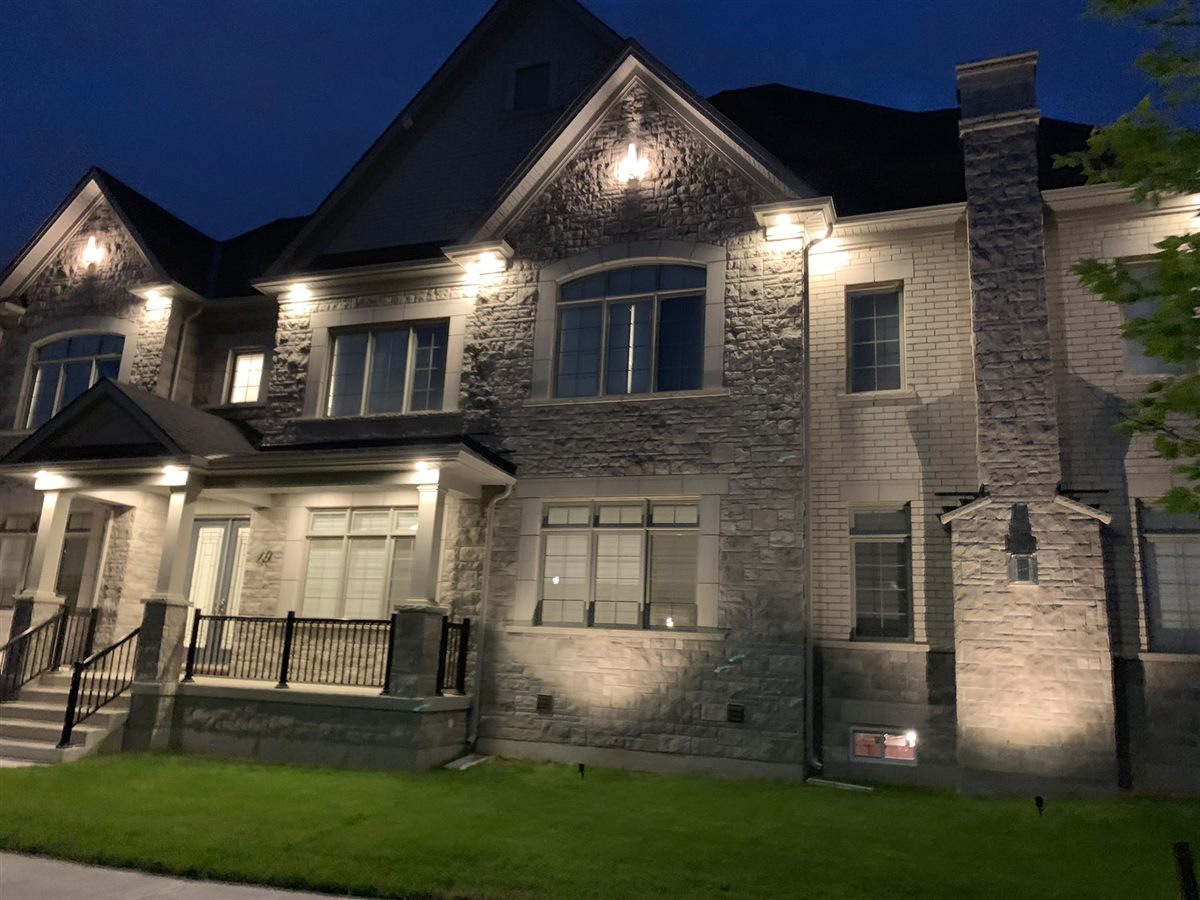
December loads don't stay indoors. Block heaters on long cords, inflatable decorations running around the clock, and holiday light strings daisy-chained along a wet soffit line. Three rules prevent nearly all of it: use exterior-rated, GFCI-protected outlets for anything outside; never plug one extension cord into another — use one continuous cord sized for the load; and inspect every light string for frayed insulation before it goes up, because a damaged cord buried in snow is exactly how January insurance claims start. Better still, make it permanent: hardwired LED soffit and eave lighting sits on a proper circuit with a switch and weather-rated fixtures, so the annual cord problem disappears entirely.
The life-savers: CO alarms and GFCI
Winter is carbon monoxide season. Furnaces, fireplaces and attached garages all add CO risk to a sealed-up house, and Ontario law requires working CO alarms outside every sleeping area — test them monthly and replace units past their rated life, usually 7–10 years. On the electrical side, GFCI protection matters more in winter than any other season, because water and electricity meet constantly: meltwater at the garage door, wet boots on basement floors, humidifier condensate near outlets. Kitchen counters, bathrooms, garages, exterior receptacles and unfinished basements should all be GFCI-protected under the Ontario Electrical Safety Code. If your home still has original ungrounded outlets in these areas, a full electrical safety inspection maps exactly what's missing — it takes about 90 minutes and it's the cheapest risk assessment a homeowner can buy.
What professional winter prep costs
Here's honest pricing for the winter-prep work we do most, so you can budget before the cold arrives:
| Winter job | Typical cost (CAD, installed) |
|---|---|
| Electrical safety inspection with written report | $250 – $400 |
| GFCI outlet replacement (per location) | $150 – $250 |
| Dedicated circuit for space heater or block heater | $350 – $600 |
| Panel upgrade 100A to 200A | $2,800 – $4,500 |
| Hardwired interconnected smoke/CO alarm package | $400 – $900 |
Factors that affect price: panel location and service entrance condition, fishing wire through finished walls, and whether the ESA inspection surfaces older defects that need correction first. Every quote should include the ESA permit — it's not optional, and a contractor who suggests skipping it is transferring the risk to you.
Sources
- Electrical Safety Authority (ESA) — electrical safety resources
- Statistics Canada — Fire loss in Canada
- Ontario.ca — Carbon monoxide safety
- Natural Resources Canada — Energy efficiency
Winter electrical safety FAQs
How many space heaters can I run on one circuit?
One, safely. A 1,500-watt heater draws 12.5 amps on a 15-amp circuit, leaving little headroom for anything else. If you need heat in two rooms regularly, the right fix is a dedicated circuit for each heater — about $350–$600 installed — not a heavier-duty extension cord.
Why do my lights flicker when the furnace starts?
A brief dim at blower startup is usually normal inrush. Flickering that lasts seconds, happens elsewhere in the house, or comes with a buzzing panel points to a loose neutral or an overloaded service — both are worth a professional look before winter peaks. In older homes this is often the first sign a panel upgrade is due.
Are extension cords safe for outdoor holiday lights?
Only outdoor-rated cords, on GFCI-protected outlets, in good condition, and never linked end-to-end. If a cord or string is frayed, discoloured or warm, replace it — a damaged cord in snow or meltwater is a genuine shock and fire risk. For anything permanent, hardwired exterior lighting is the safer answer.
How often should I test CO and smoke alarms?
Test both monthly — press the button until it sounds. Replace batteries at least yearly, and replace the whole unit at end of rated life, typically 7–10 years for CO alarms and 10 for smoke alarms. Ontario's Fire Code requires CO alarms outside sleeping areas in homes with fuel-fired appliances or attached garages.
Is a home electrical inspection worth it before winter?
In my honest opinion, yes — especially for homes over 40 years old. A 90-minute inspection catches the warm outlets, overloaded circuits and missing GFCI that cause winter failures, and it gives you a written report you can act on or shop with. It costs a few hundred dollars and has saved clients from five-figure January emergencies.
Get your home winter-ready
If any of this sounded familiar — the warm outlet, the tripping breaker, the dimming lights — don't wait for the coldest week of January to find out what it means. We're licensed, ESA-permitted and local to the GTA. Free winter safety estimates: call 416-903-7166.