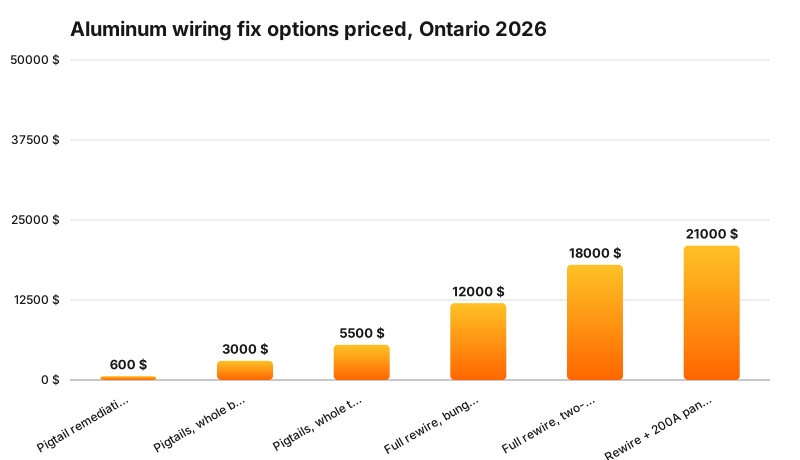
Updated for 2026. Fixing aluminum wiring in an Ontario home costs $3,000–$7,000 for proper pigtail remediation, or $12,000–$20,000 for a full copper rewire — and the right option depends on the home, not the sales pitch. Homes built between roughly 1965 and 1978 are the ones to check.
Why aluminum wiring worries insurers — and when it should not
Between the mid-1960s and late 1970s, copper prices pushed builders toward aluminum branch wiring in Ontario subdivisions. Aluminum is a legitimate conductor, but it behaves differently from copper: it expands and contracts more with every load cycle, which loosens terminations over time, and its oxide layer resists current at connection points. Loose, oxidized connections get hot. That is the entire problem — and it lives at every outlet, switch, light fixture and panel connection, which is why the fix is methodical terminations work, not panic.
Well-remediated aluminum wiring is insurable, saleable and safe. Unremediated aluminum is what triggers insurance letters, conditional coverage and price reductions at offer time.
How to tell if your home has aluminum wiring
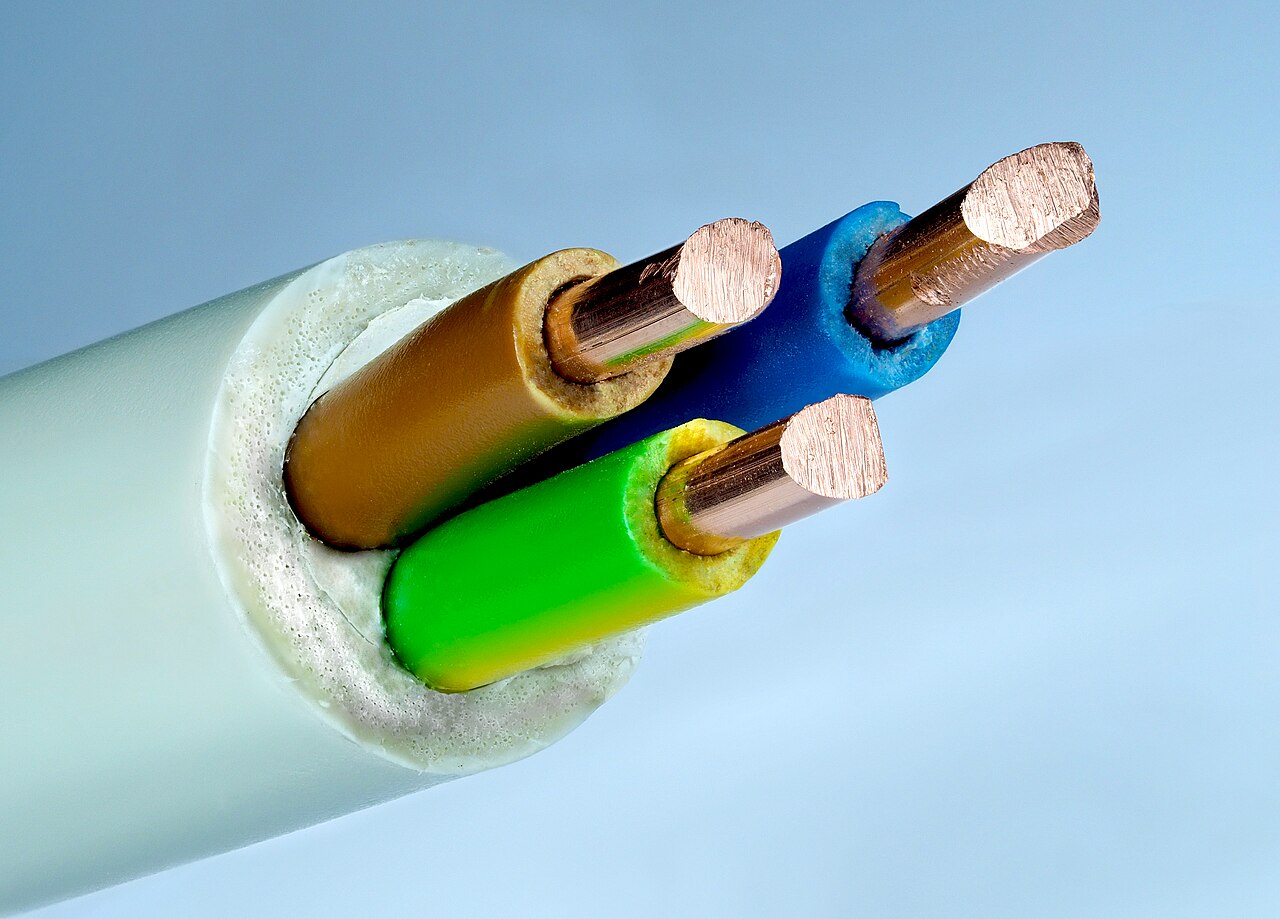
The reliable checks take ten minutes. Kill the breaker, pull one receptacle cover and look at the bare conductor: aluminum is silvery-grey and slightly softer-looking than bright copper, usually marked AL or ALUM. Check the panel legend or a cable jacket in an unfinished area — a 1965–1978 build date in Mississauga, Brampton or Toronto subdivisions is itself a strong hint. Warning signs of trouble include warm or discoloured cover plates, flickering circuits, a buzzing panel, or the smell of hot plastic that comes and goes.
The three fix options, priced honestly
| Option | What it is | Typical cost (CAD) | Best for |
|---|---|---|---|
| Pigtailing (remediation) | Copper tails joined to every aluminum conductor with CSA-approved connectors inside each box | $500–$800 per room; $3,000–$7,000 whole home | Most homes; insurable, code-accepted, least invasive |
| Device replacement (CO-ALR rated) | Every switch and receptacle swapped for aluminum-rated (CO-ALR) devices, plus panel terminations checked | Similar to pigtailing; often combined with it | Homes due for device refresh anyway |
| Full copper rewire | All aluminum branch circuits replaced with copper, usually with a panel upgrade | $12,000–$20,000+ | Renovations, heavy damage, full gut jobs |
The most common misunderstanding: none of these options is a "band-aid." Properly executed pigtailing with CSA-approved connectors — COPALUM-style crimps or listed screw-terminal connectors, with anti-oxidant compound where specified — is the industry-accepted, inspection-passed permanent fix, and our aluminum wiring replacement work is scoped and certified that way.
Pigtailing done right vs. the handyman version
This is where corners get cut. Aluminum connections require connectors rated and listed for aluminum — copper-only wire nuts and spring devices are exactly what cause the overheating stories. Correct work means compatible connectors, proper torque, anti-oxidant compound where the manufacturer calls for it, no double-lugging, and an outlet-by-outlet schedule so nothing gets missed. Ask any contractor to specify the connector by name on the quote; if they cannot, that tells you everything. And because kitchens, bathrooms and laundry rooms have the highest loads, they are never the rooms to cheap out on.
On the day, expect methodical work: furniture moved and protected, power off one room at a time, every device opened, every joint remade, torque-checked and labelled. A two-storey home runs two to four days with a two-person crew. It is not glamorous work, but it is exactly the kind of work that either gets done properly in one pass or gets paid for twice.
When a full rewire is the honest answer
Remediation fixes connections; it does not change what is inside your walls. If the sheathing is crumbling, circuits have been hacked at over decades, or the home is already opened up for a major renovation, a rewire with a panel upgrade can be the better long-term investment — and pairs naturally with knob-and-tube removal in the same walls — one disruption, one permit, one finished result. I will always tell you when remediation is the smart money and when it is postponing the inevitable; the two situations look different and a proper walk-through tells them apart in an hour.
Insurance, resale and the paperwork that matters
Insurers generally accept aluminum wiring once a licensed contractor's certificate documents the remediation method — expect a written scope, photos and an ESA certificate. Keep that package forever: it answers the question at every future renewal, claim and sale. Unremediated aluminum increasingly triggers 30-day notices from insurers, and buyers' agents in the GTA now price it into offers before inspection day.
Here is the sequence I recommend, in order: get the walk-through and written scope first; schedule the remediation before your insurance renewal date; keep the certificate, invoice and photos together in one folder. When you sell, that folder goes in the disclosure package, and in my experience it ends the aluminum conversation before it starts. Buyers are not afraid of remediated aluminum — they are afraid of unknown aluminum, and paperwork is what turns unknown into known.
Sources
- Electrical Safety Authority (ESA) — Ontario's authority on aluminum wiring safety and remediation requirements.
- Ontario Electrical Safety Code — the code governing connections and acceptable remediation.
- CMHC — guidance on older home wiring for Canadian homeowners.
- Government of Canada — electrical fire safety resources for homes.
Questions homeowners ask me about aluminum wiring
Should I avoid buying a house with aluminum wiring?
No — price it, do not walk from it. A $4,000–$6,000 remediation is negotiating room, not a deal-breaker, especially beside today's GTA prices. What should stop a purchase is a seller who will not allow inspection access or documentation of past work.
Can I just replace the outlets myself?
Only with devices explicitly rated for aluminum (CO-ALR) and only if you understand torque, anti-oxidant compound and the notification of work ESA expects. Most of the dangerous DIY aluminum work I correct began as a weekend outlet swap with the wrong devices.
Will my insurance drop me over aluminum wiring?
Insurers increasingly require documented remediation within a set window, but a contractor's certificate of remediation almost always satisfies them. Get the letter before your renewal notice arrives; scrambling after a 30-day notice costs more and limits your options.
How long does remediation take?
A typical 1,200–1,600 sq ft home takes two to four days with two electricians, room by room, plus an ESA inspection. You keep living in the home — power is off room by room, not house by house.
How do I get a straight answer on what my home needs?
An honest assessment starts with a walk-through and a written scope, not a phone quote. We assess aluminum wiring across Brampton, Mississauga and the entire GTA. Free estimates — call 416-903-7166.