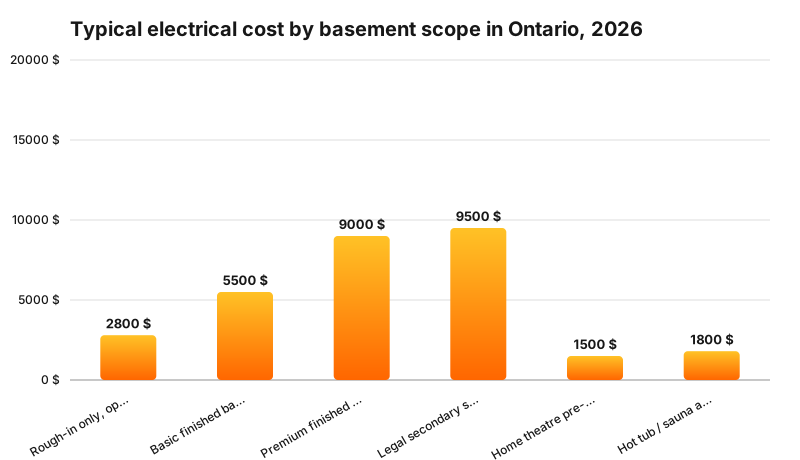
Updated for 2026. A finished basement electrical package in Ontario typically runs $4,000–$9,000 installed for a standard 600–900 sq ft space — and legal secondary suites land at $8,000–$12,000 once interconnected smoke and CO protection, a kitchenette circuit group and ESA permits are included. Roughing in during construction saves 30–50% over retrofitting later.
What a basement electrical package actually includes
When homeowners ask what they are paying for, this is the honest list: a sub-panel or panel capacity check, lighting circuits, receptacle circuits (living areas need arc-fault protection under current code), a bathroom circuit group with GFCI protection, smoke and CO detector interconnection, cable routing, and the ESA notification and inspection. A proper quote itemizes every one of those — if a basement quote is one vague line item, ask what is inside it.
Protection requirements catch many DIYers off guard: living-area receptacles need arc-fault protection, anything near water needs GFCI, and the smoke and CO alarms must interconnect with the rest of the house so a basement event wakes everyone upstairs. These are not upsells — they are current-code requirements an ESA inspector will check line by line.
What basement electrical costs in Ontario in 2026
| Scope | Typical range (installed, CAD) |
|---|---|
| Rough-in only, open studs (before drywall) | $2,000 – $3,500 |
| Basic finished rec room (pot lights, outlets, bathroom circuit) | $4,000 – $6,500 |
| Premium finished basement (dimming zones, theatre, bar, steam shower) | $7,000 – $11,000 |
| Legal secondary suite (full code package) | $8,000 – $12,000 |
| Sub-panel addition | $1,200 – $2,000 |
| ESA permit and inspection | $150 – $350 |
The factors that move these numbers are consistent: ceiling type (drywall over open joists is cheap, soffits and dropped ceilings add hours), how far the basement is from the main panel, whether the main panel has capacity or needs a service upgrade first, and finish level. Our basement wiring quotes separate must-do code items from options so you can phase the spend honestly.
The ceiling decision: drywall, drop or exposed
This single choice swings the budget more than any other. Open-joist drywall lets us run cable straight and fast — the cheapest outcome. Bulkhead-and-drywall designs look sharp but every soffit is hand-fished cable and extra junction planning. Drop ceilings cost more in materials but make every future change trivial, which is why I recommend them under mechanical rooms and anywhere you expect to finish in phases. Decide the ceiling before we quote, not after; a ceiling change mid-job is the most common basement budget-killer I see.
Lighting a basement that does not feel like a basement
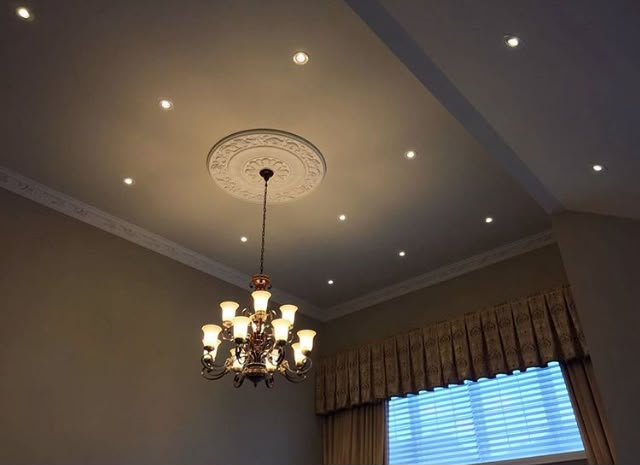
The difference between a basement that feels like a rental and one that feels like part of the house is almost always lighting. My standard recipe for a 700 sq ft rec room is 10–14 dimmable LED pot lights on two or three zones, layered with indirect LED strip coves on bulkheads where the budget allows. Recessed fixtures must be IC-rated if insulation will sit above them — and in Ontario, it usually will. All of this is far cheaper as a pot light rough-in before drywall than as retrofit work through a finished ceiling.
Home theatres, bars and the fun circuits
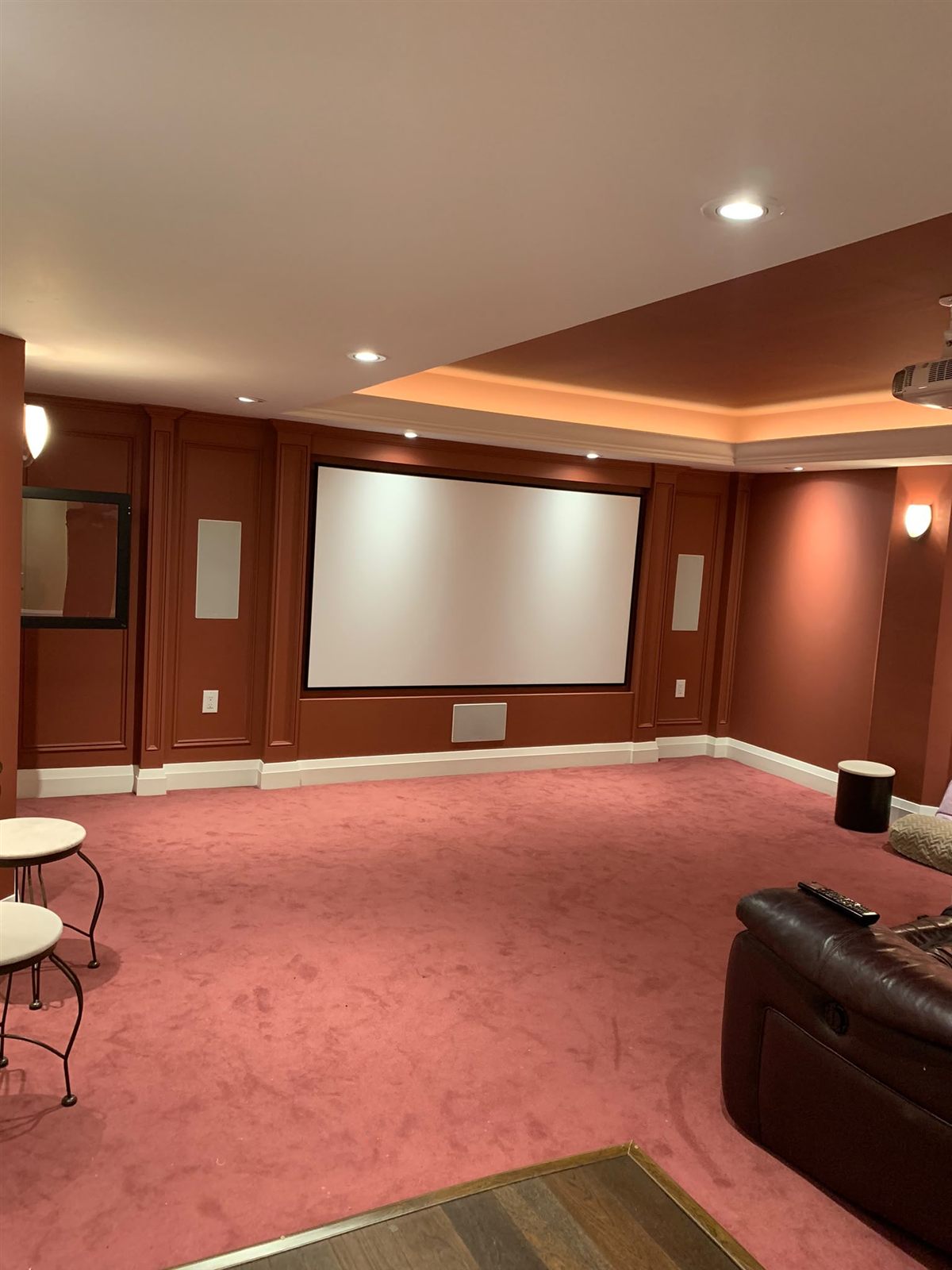
Dedicated 20-amp circuits for a theatre rack, projector and powered subwoofer are cheap insurance against the dimming-and-hum problems that share circuits cause. A bar fridge, dishwasher or wine cooler each want dedicated circuits too, and anything near a wet bar needs GFCI protection. If you are pre-wiring speakers and a projector, our home theatre pre-wiring runs about $1,200–$2,500 depending on speaker count — a fraction of what opening finished ceilings later costs.
One detail that separates a professional rough-in from a fast one is labelling: every cable end identified at the panel, every box documented. It costs us minutes and saves you — or any future electrician — hours.
Legal suites have their own rulebook
A legal basement apartment in Ontario adds hard requirements beyond a rec-room finish: interconnected smoke alarms and CO alarms on every level, a dedicated kitchen circuit group, adequate receptacles with arc-fault protection, and inspection under both the Ontario Building Code and the Electrical Safety Code. Do not let a contractor wave this away — an illegal suite means insurance that will not pay and a municipality that can order it closed. We quote legal suites as a complete compliance package because piecemeal work is where landlords get burned.
One more planning note: think in phases. We regularly rough in a full basement during construction even when the owner will finish only half of it now — the second half's cable, sub-feed and ceiling box locations cost a few hundred dollars extra during rough-in and thousands as a retrofit. Tell us your five-year plan at the estimate visit and we will wire for it.
Sources
- Electrical Safety Authority (ESA) — notification of work, permits and inspection requirements for basement electrical.
- Ontario Building Code — the rules governing legal secondary suites.
- Ontario Electrical Safety Code — wiring, protection and device requirements.
- CMHC — secondary suite planning and renovation guidance for homeowners.
Questions homeowners ask me about basements
Does a finished basement need a permit in Ontario?
Yes — electrical work in a finished basement requires an ESA notification of work and inspection, and a legal suite additionally triggers Building Code requirements around egress, ceilings and fire separation. The permit cost is modest; an unpermitted basement surfaces at resale and can force expensive corrections.
Can my existing panel handle a basement finish?
Often, yes — a load calculation answers it in an hour. Full 100-amp panels sometimes need a sub-panel ($1,200–$2,000) or, if you are adding an EV charger or hot tub too, a full service upgrade. Check this before finalizing your basement budget, not after the drywall is up.
How long does basement electrical take?
Rough-in for a standard basement is two to four working days; a legal suite package runs a week with inspection scheduling on top. We coordinate with your drywaller so inspections never hold up the critical path.
Is it worth roughing in extras I might never use?
The cable is nearly free during rough-in and expensive later. I always recommend roughing in one spare circuit to the far corner and conduit for future possibilities — it adds a couple hundred dollars now and saves a ceiling replacement later.
How do I get an honest basement electrical quote?
Get two or three itemized quotes from Licensed Electrical Contractors, compare line by line, and ask who handles the ESA permit. We serve Brampton, Mississauga and the rest of the GTA. Free estimates — call 416-903-7166.