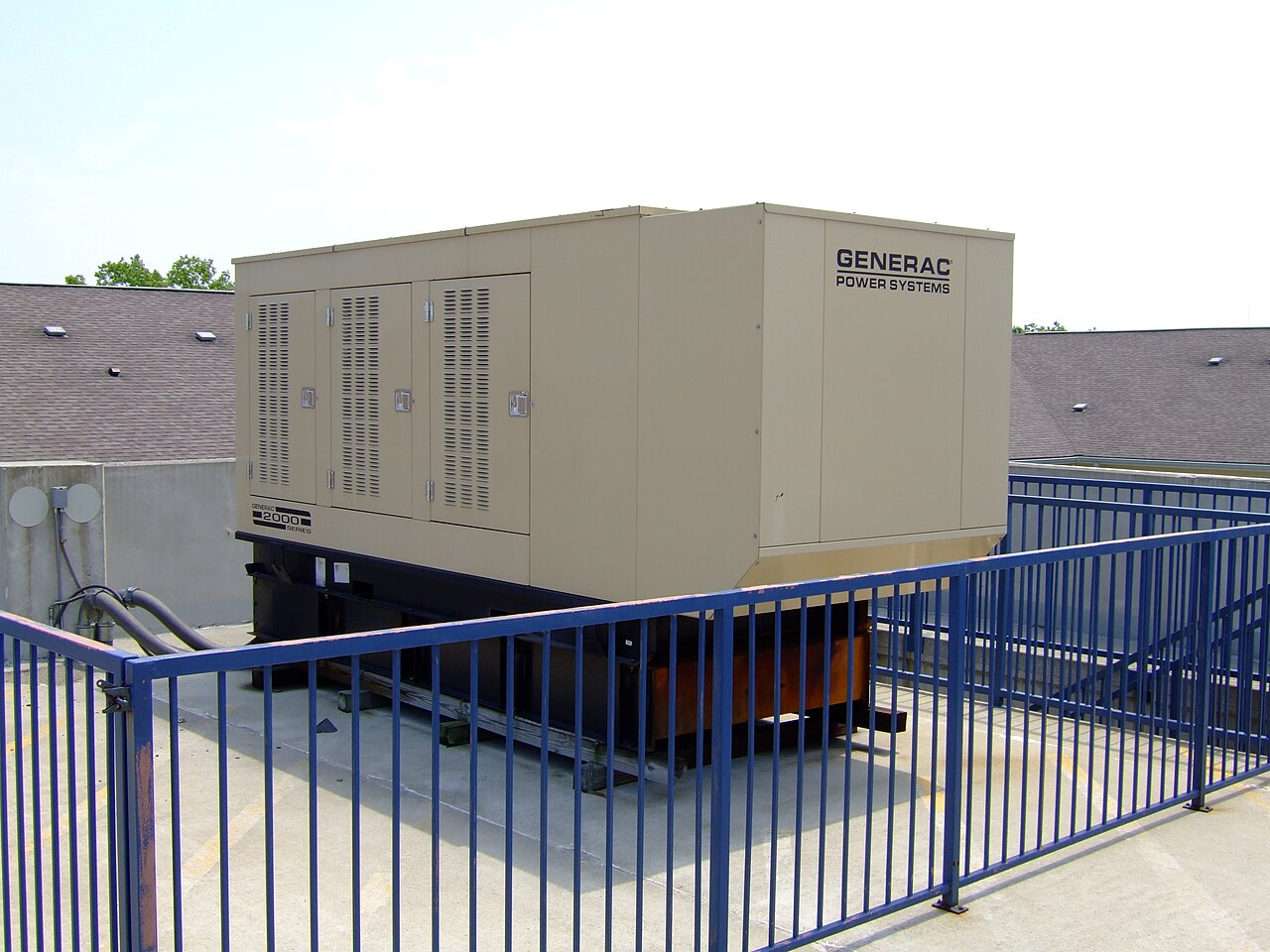
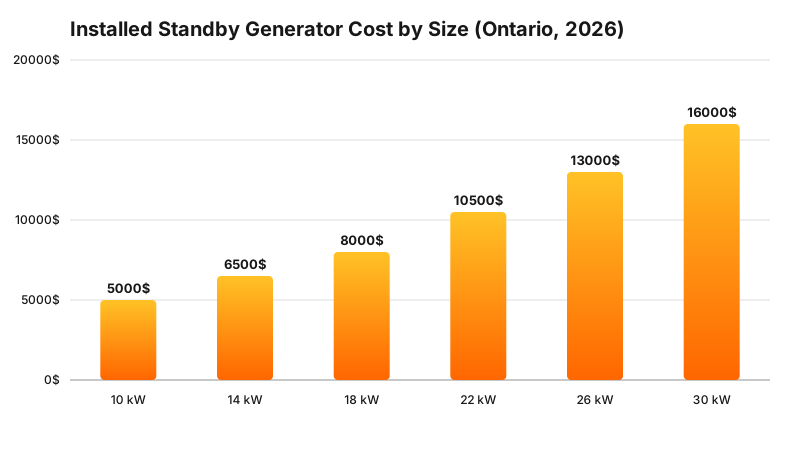
Updated for 2026. A whole-home standby generator in Ontario typically costs $5,000 to $16,000 installed depending on size, plus ongoing maintenance. The unit itself is only part of the job — the transfer switch, gas connection, permits, and siting make up the rest.
Standby generator costs by size (2026)
| Generator size | What it covers | Typical installed cost (CAD) |
|---|---|---|
| 10 kW | Essentials: furnace, fridge, some lights, sump pump | $4,500 – $6,000 |
| 14 kW | Essentials plus most kitchen circuits and electronics | $6,000 – $7,500 |
| 18 kW | Most of a 2,000 sq ft home, excluding big electric heat | $7,500 – $9,500 |
| 22 kW | Whole-home coverage for gas-heated houses up to ~2,500 sq ft | $9,500 – $12,000 |
| 26 – 30 kW | Large homes, pools, multiple HVAC systems | $12,000 – $18,000+ |
Every one of those prices assumes an automatic transfer switch, which is the component that senses a outage, starts the generator, and shifts the house over in under a minute. Skimping on the transfer switch is not a saving — it's the difference between a standby system and an expensive lawn ornament.
How to size a generator honestly
Here's the sizing conversation I have with homeowners, minus the salesmanship. Start with what you can't live without: furnace fan and controls (2–4 kW with modern ECM blowers), fridge and freezer (1–2 kW starting), sump pump (1.5–2.5 kW — non-negotiable in Brampton basements), well pump if you're rural, and a handful of lighting and device circuits. That's an 8–10 kW essential-loads list for most homes. Add central air, an electric range, a dryer, or a hot tub, and you climb quickly toward 18–22 kW.
The honest caveat: homes with electric furnaces, electric water heaters, or baseboard heat can't be fully covered by typical air-cooled units — heat alone can exceed 20 kW. For those homes we either size a much larger liquid-cooled unit or design an essentials-only backup panel, which most families find completely adequate through a winter outage.
What the installation actually involves
A proper standby install is a three-trade job. Electrically: the transfer switch, generator connections, load management, and an ESA notification of work and inspection. Mechanically: gas line sizing and connection by a licensed gas fitter — the single most common surprise, since a 22 kW generator drinking natural gas needs a proper service tap, not a tee off the barbecue line. And practically: siting the unit on a code-compliant pad with clearances, away from windows and doors, which municipal bylaws limit for exhaust.
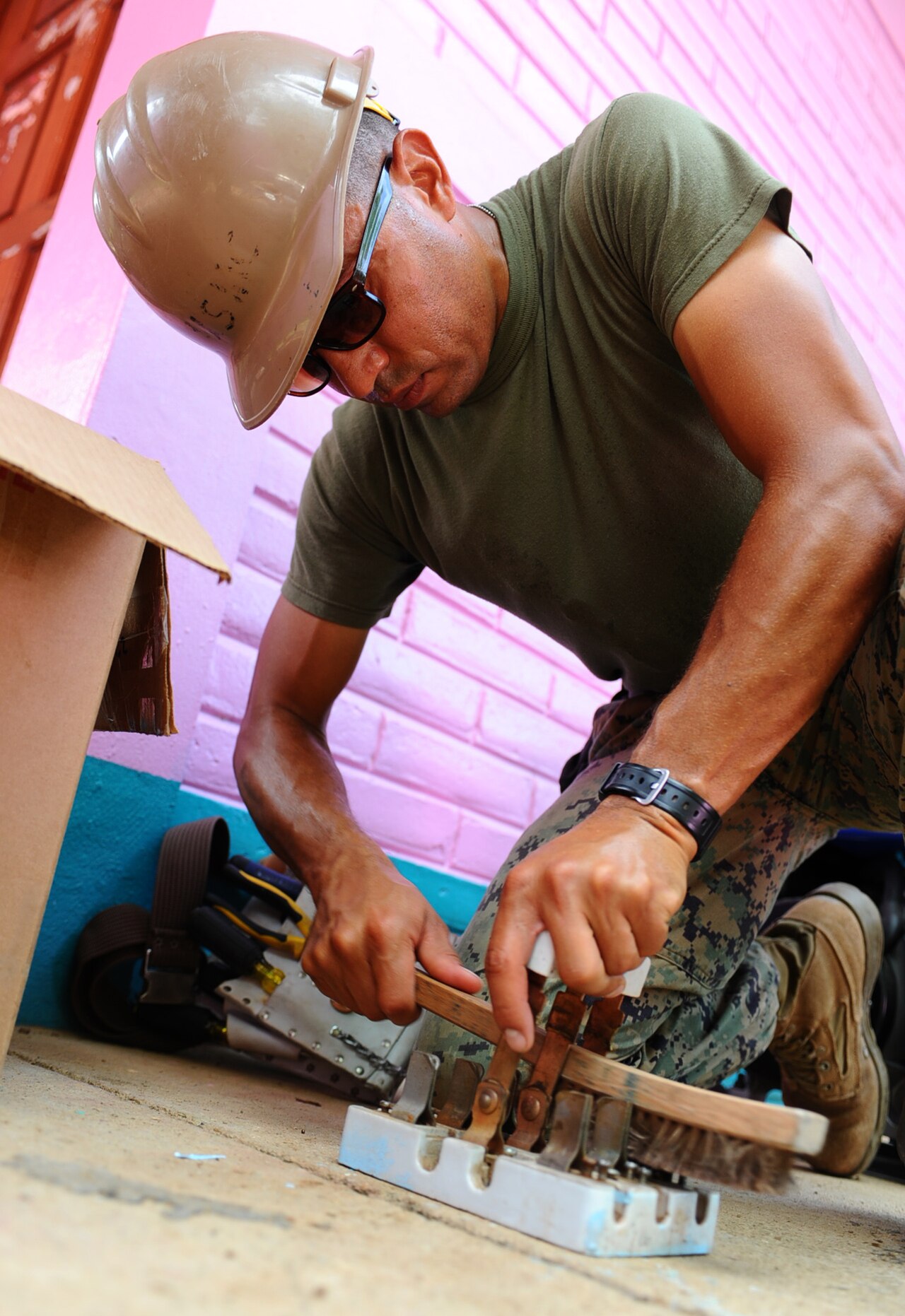
Our generator installations quote the electrical scope, coordinate the gas fitting, handle the ESA permit, and commission the system under load before we call it done. Total timeline from signed quote to automatic backup is typically one to three weeks, including equipment lead time.
Standby vs portable: the honest comparison
A portable inverter generator ($800 – $2,500 for quality units) plus a manual transfer switch or inlet box ($400 – $1,200 installed) covers essentials for a fraction of standby pricing. The trade-offs are real: someone has to wheel it out, fuel it every 6–10 hours, and manage extension cords — in January, at night, in an ice storm. A standby unit runs on natural gas or propane, starts itself, and needs nothing from you except annual maintenance (roughly $300 – $500 a year).
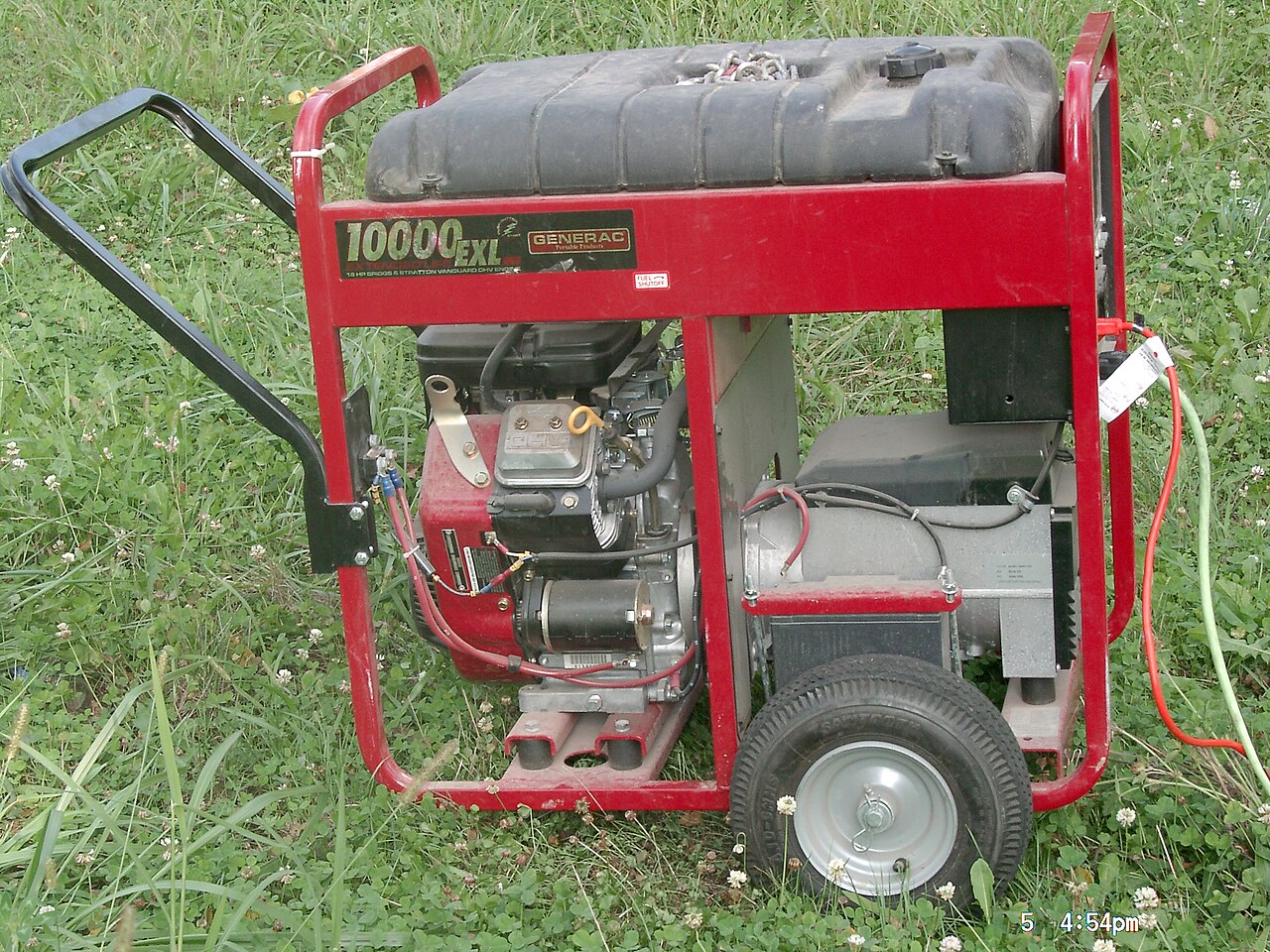
My practical advice after twenty GTA winters: if anyone in the house depends on powered medical equipment or you work from home, standby is worth the premium. If you just want the fridge, furnace, and Wi-Fi to survive a six-hour outage, portable plus transfer switch is the smart money.
Ontario realities: outages, permits and placement
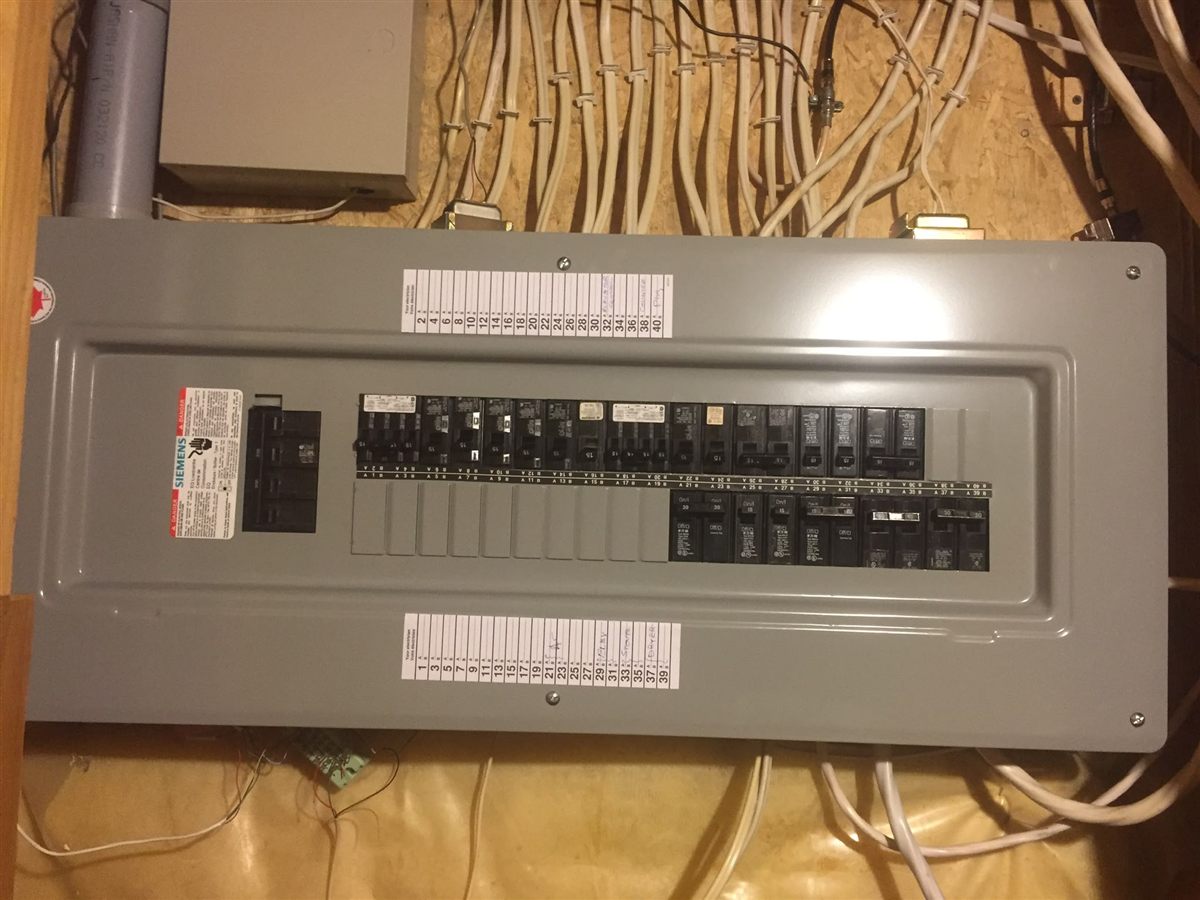
Ontario's grid is reliable but not immune — ice storms, summer derechos, and equipment failures still take neighbourhoods out for hours or days, and rural properties on the fringe of the grid see longer events. Every permanent standby generator in Ontario requires an ESA permit and inspection, gas work needs a licensed gas fitter, and exhaust clearance rules apply. It's also worth pairing a generator with whole-home surge protection — outages and restoration events are exactly when sensitive electronics take their damage, and a panel-level SPD costs a few hundred dollars against thousands in fried boards. Rural homeowners in Caledon and the surrounding townships should also plan for propane tanks when natural gas isn't at the lot line. If you're not sure your panel and service entrance are generator-ready, book an electrical safety inspection first — it turns the quote from an estimate into a number.
Sources
- Electrical Safety Authority (ESA) — permits and inspection for standby generator installations in Ontario.
- Ontario Electrical Safety Code (O. Reg. 164/99) — code requirements for generator connections and transfer equipment.
- Get Prepared — Government of Canada — official emergency preparedness guidance for power outages.
- Hydro One — outage information for Ontario's largest electricity distributor.
- IESO — data on Ontario's electricity system reliability.
Frequently asked questions
Is a whole-home generator worth it in Ontario?
For most GTA homeowners it's a comfort purchase, not a financial one — you're buying automatic, hands-off backup through ice storms and grid failures. Homes with sump pumps, medical equipment, or home businesses see the most real value, and rural properties where outages run longest benefit most.
What size generator do I need for a 2,000 sq ft house?
For a gas-heated 2,000 sq ft home, an 18–22 kW air-cooled unit typically covers everything except the central air running simultaneously with the range and dryer. We do a circuit-by-circuit load calculation and, where budgets matter, design load-shedding so big loads rotate instead of forcing a bigger generator.
Does a standby generator need a permit in Ontario?
Yes — the electrical connection and transfer switch require an ESA notification of work and inspection, and the gas line needs a licensed gas fitter with TSSA credentials. Any installer who suggests otherwise is leaving you with uninsurable, unpermitted work on your home's most critical circuit.
How long does installation take?
Physical installation is usually one to two days: pad, unit, transfer switch, gas connection, and commissioning. From quote to done, plan one to three weeks including equipment ordering and permit scheduling. Storm season queues stretch that timeline, which is why autumn is the right time to book in Brampton and the GTA.
What maintenance does a standby generator need?
An annual service — oil, filters, battery check, transfer switch exercise, and a load test — runs $300 – $500. Modern units self-exercise weekly and alert you to faults. Skip maintenance for three years and the day you need it most is the day you'll find out the battery died.
Whether you're comparing quotes or just want an honest sizing opinion on your home, we install standby and portable backup systems across the GTA. Call 416-903-7166 for a free assessment and a written, fixed-price quote.