“Irshad and his team installed potlights throughout our main floor, hooked up our new appliances and added under-cabinet lighting in the kitchen. Clean, precise work and the ceiling patch lines are invisible. Everything was left spotless at the end of each day.”
Whole-Home Surge Protection in Brampton & the GTA
A surge is a brief voltage spike on your home's wiring — from grid events (lightning strikes on lines, switching surges from the utility), but far more often from inside the house: compressors cycling, motors starting, even large appliances switching on and off. The electronics now embedded in everything — furnaces, washers, TVs, garage-door openers, EV chargers — are far more sensitive to these spikes than the electromechanical devices they replaced. Surge damage is also cumulative and invisible: most electronics degrade slowly on small surges long before a dramatic kill.
Why Plug-In Power Bars Aren't Enough
Power bars have their place — point protection for a computer or TV — but they share three limitations. They only guard what's plugged into them (your furnace, fridge and dishwasher have no power bar), their protection degrades invisibly with every surge absorbed (most people never replace a worn strip), and they do nothing for large appliances and hardwired equipment. A whole-home SPD at the panel protects every circuit — hardwired and plugged-in alike — with indicators that show protection status at a glance. The two work together: panel SPD as the first line, quality point-of-use strips as backup for sensitive electronics.
Type 1 vs. Type 2 SPDs
Surge protective devices come in recognized types, and the difference matters for installation:
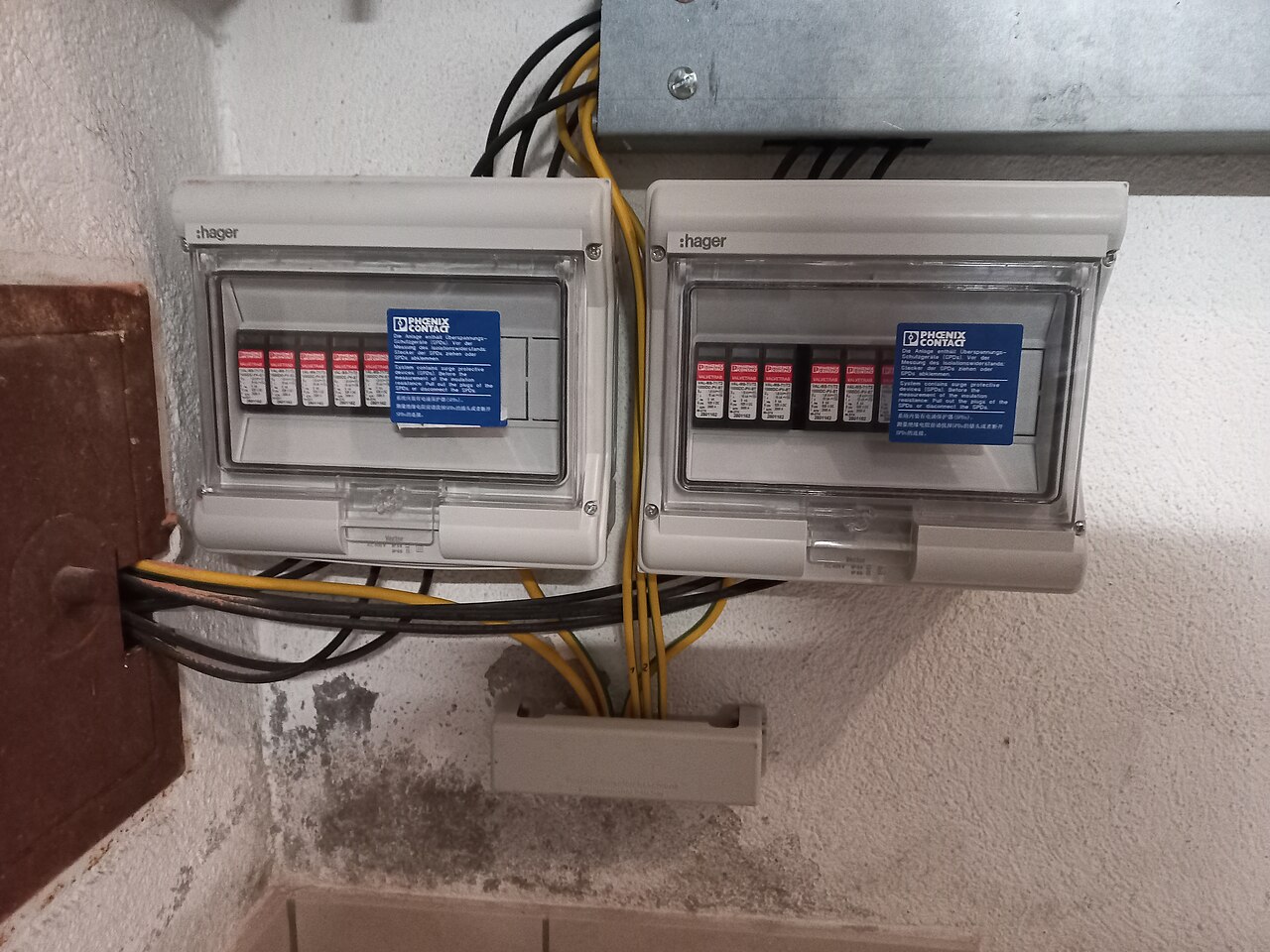
- Type 1 SPDs install on the line side of your main breaker — between the utility and your panel — typically where a service upgrade or meter-base work is already happening. They handle external surge sources directly.
- Type 2 SPDs install on a dedicated breaker inside your panel — the standard retrofit for existing GTA homes. They protect against both external surges and the internally generated spikes from your own appliances.
For most homes, a quality Type 2 device professionally installed at the panel is the right answer. If your project involves service or panel work, adding Type 1 protection while the equipment is open costs little extra — ask us to bundle it.
Brands & Specs That Matter
The market is full of unlisted imports, so the spec sheet is where quality shows. We install CSA/UL 1449-listed residential SPDs from the major electrical manufacturers — here's how the field compares:
| Brand | Common residential line | Type | Notes |
|---|---|---|---|
| Siemens | FirstSurge series | Type 1 / 2 | Strong surge-current ratings, good Canadian distribution |
| Eaton | CHSPT / Ultra | Type 1 / 2 | Broad panel compatibility, solid connected-equipment warranty |
| Square D (Schneider) | HESD / SurgeBreaker | Type 2 | Snaps into QO and Homeline panels, tidy install |
| Leviton / Intermatic | Residential SPD lines | Type 2 | Reliable budget-to-mid options with status indication |
When comparing units — ours or anyone's — the specs that actually matter:
- Surge-current rating (kA) — look for 40–80 kA per phase on quality residential units; bigger numbers absorb more punishment.
- VPR under 600V — the voltage protection rating on line-to-neutral should be 600V or less for 120/240V service; lower clamping voltage means better protection.
- CSA/UL 1449 listing — the certification that proves the device was tested; unlisted marketplace devices are where disappointment lives.
- Status indication — LEDs or an audible alarm showing protection is alive, since SPDs wear out silently.
- Connected-equipment warranty — quality units carry $25,000 to $50,000 warranties on gear downstream of the device.
What Surge Protection Defends
Run the inventory of a modern GTA home and the case writes itself: HVAC control boards (a favourite surge casualty, and a $600+ repair), refrigerators and ranges with computer modules, washers and dryers, televisions and home theatre equipment (see our pre-wiring work), networking gear and computers, garage-door openers, and the big new one — EV chargers, whose internal electronics sit on a high-amperage circuit and cost real money to replace (see EV charger installation). Add smart-home and automation controllers and the average connected home now carries thousands of dollars in surge-sensitive electronics. Panel SPDs also pair naturally with generator systems as part of a complete power-quality strategy.
Installation: What to Expect
Installing a Type 2 SPD is a focused, short job: we isolate the panel, mount the device, land it on a dedicated two-pole breaker, torque everything to spec, verify status indication and label the installation. Most homes take one to two hours. The work is inside a live panel, so it's genuinely licensed-electrician territory — and it's also an excellent moment for a quick panel health check, which we include: breaker condition, labelling accuracy and any signs of overheating get noted for free. If your panel is full or aging, we'll mention it honestly; sometimes the SPD conversation rightly becomes a panel conversation.
Layered Protection: The Complete Strategy
Panel SPDs work best as part of a layered power-protection plan, and we design them that way. Layer one is the panel device itself, clamping spikes before they spread. Layer two is point-of-use protection — quality strips or UPS units behind sensitive electronics. Layer three, for homes that need it, is generator and UPS backup for outages themselves (see standby generators). Layer four is good grounding and bonding, because every surge-protection system depends on a low-impedance path to earth to do its job. When we install an SPD, we check the grounding system as part of the visit — it's the quiet foundation the whole strategy stands on.
A One-Visit Upgrade
If there's a simpler high-value electrical upgrade, we haven't found it: one visit, one to two hours, and every circuit in the house gains a layer of defence that works silently for years. Many homeowners pair the visit with device work — the GFCI garage outlet, the kitchen USB receptacle — since the panel is already open and circuits already mapped. Ask about bundling when you call.
Why Homeowners Choose Bano Electrical Services Ltd
- Quality hardware — CSA/UL-listed devices from Siemens, Eaton and Square D with real surge-current ratings and visible status, not bargain-bin imports.
- Licensed panel work — ESA/ECRA #7004060, proper breakers, torque-checked connections.
- Free panel health check with every SPD installation.
- Honest bundling — we flag when panel or service work should come first, and price it fairly.
Protect the electronics your home runs on — call 416-903-7166 for a free quote, or book online. We serve Brampton, Mississauga, Vaughan and the GTA.