“Irshad and his team installed potlights throughout our main floor, hooked up our new appliances and added under-cabinet lighting in the kitchen. Clean, precise work and the ceiling patch lines are invisible. Everything was left spotless at the end of each day.”
Standby Generator Installation in Brampton & the GTA
Standby generators differ from portable units in the ways that matter most during a real outage: they're permanently installed, start automatically within seconds of a power failure, run on your home's natural gas or a propane supply (no gas cans, no extension cords through windows), and connect through a transfer switch that makes the swap safe and legal. Ontario's outage history — ice storms, wind events, grid stress during extreme cold — has made standby systems one of the fastest-growing requests in our residential calendar.
Why GTA Homeowners Are Installing Standby Power Now
Ontario has a documented habit of long outages. The December 2013 ice storm knocked out power to more than 600,000 Toronto-area customers, some for over a week — in late December, with frozen pipes and dark traffic lights across the region. The May 2022 derecho tore through southern Ontario leaving hundreds of thousands without power, some in rural pockets for more than a week. And every cold snap brings local GTA strain: ice-laden branches take down feeders in Brampton and Mississauga, and restoration measured in days becomes normal. The pattern homeowners cite isn't fear — it's the arithmetic of what's lost in 48 hours without power: basement sumps stop, freezers thaw, furnaces die, pipes freeze. A standby generator answers all of it automatically, including when the house is empty.
What Does a Standby Generator Cost in Ontario?
Standby pricing has three parts — the generator set, the electrical installation (transfer switch and connection), and the gas work. Here are honest 2026 ranges for the air-cooled units that suit most GTA homes:
| Generator size | Covers | Equipment (CAD) | Installed total (CAD) |
|---|---|---|---|
| 10–14 kW | Essential circuits — furnace, fridge, freezer, sump pump, lights | $4,000 – $7,000 | $9,000 – $13,000 |
| 16–20 kW | Most of the home with modest load management | $6,000 – $9,500 | $11,000 – $16,000 |
| 22–26 kW | Full whole-home including central air | $8,000 – $12,500+ | $14,000 – $18,000+ |
The three names we quote most are Generac Guardian, Kohler RES/RCB and Cummins QuietConnect — all credible, all serviceable in Ontario, differing mainly in warranty terms and dealer support. Liquid-cooled units (30 kW and up, or for large custom homes) are a different price class entirely and quoted per project. Cost drivers: generator size and brand, transfer switch type, panel condition and distance to the set, gas source and distance, pad work, and whether your service needs upgrading first (see our panel upgrade service).
Sizing Your Generator: How Many kW Do You Need?
Sizing is where honest advice saves real money. Generators are sold by kilowatt output, and the right size is a load question, not a budget question:
- Essential-circuits backup (10–14 kW) — furnace, fridge, freezer, sump pump, some lights and receptacles. The right choice for modest homes whose owners want heat, food and dryness during an outage.
- Partial whole-home (16–20 kW) — adds most of the kitchen, well pump or basement circuits, and lets daily life continue with load management (don't run the dryer and the range simultaneously).
- Full whole-home (22–26+ kW) — carries everything including central air, electric ranges and hot tubs without thinking about it.
We perform a load calculation from your panel and discuss your priorities — sump pump protection matters more to Heart Lake homeowners than to most — then recommend a size. Oversizing wastes thousands; undersizing disappoints precisely when it matters. If you're also planning an EV charger or a hot tub, tell us during sizing so the generator is designed around both from the start.
Automatic Transfer Switches & Load Management
The transfer switch is the heart of a standby system — the device that disconnects your home from the grid and connects it to the generator automatically, and back again when utility power returns. It matters for two reasons. Safety first: a generator back-feeding the grid endangers line crews working on what should be dead wires — the transfer switch makes back-feeding impossible. Legal second: Ontario requires it, and ESA inspectors verify it.
We install automatic transfer switches matched to your generator and panel — budget $2,500 to $5,500 including the electrical installation for the standard scope. Where a mid-size generator needs to carry heavy loads selectively, we add load-management modules (Generac's Smart Management Module and equivalents, roughly $400 to $800 each installed) that shed big loads intelligently — letting a 16 kW generator behave like a larger one for a fraction of the price difference. The transfer switch install is typically a day's electrical work, and it's the component that makes the whole system automatic: nobody needs to be home, awake or handy for power to return.
The Trades Involved: ESA, TSSA & Enbridge
A standby generator touches three regulated scopes, and it's worth knowing who holds which licence:
- Electrical — the transfer switch, generator connection, grounding and panel integration. This is ECRA-licensed electrical contractor work, and it's ours directly: Bano Electrical Services Ltd holds ESA/ECRA #7004060. No electrical subcontractor, no phone tag between trades.
- Gas piping — the fuel line to the generator is TSSA-licensed gas fitter work. We coordinate directly with gas fitters we trust across the GTA, on the same schedule as our electrical work.
- Gas service capacity — larger generators can exceed your meter and service capacity. Enbridge may need to upsize the meter or service, which is typically a no-cost or low-cost assessment but adds lead time — one more reason to start the conversation early.
You may have noticed that some of the biggest generator pages online belong to general contractors who subcontract every licensed scope on the job. That model works, but it means three companies, three schedules and diffused accountability. Every licensed trade on a Bano generator project answers to one contractor, and the electrical licence behind the most safety-critical scope is ours — held in-house, verifiable with ESA, and on every document we file.
Permits & Inspection: the Section 26 Checklist
Standby generator installations are real regulated work, and the paperwork is part of the job. Our standard checklist:
- Electrical permit filed under ESA/ECRA #7004060 before work begins (generator connections fall under OESC Rule 26).
- Transfer switch installation — sized to the service, correctly located, documented on the permit.
- Generator connection and overcurrent protection — conductors, breakers and disconnects per code.
- Grounding and bonding of the generator set — verified, not assumed.
- Gas permit pulled by the TSSA-licensed gas fitter for the fuel line.
- ESA inspection of the completed electrical scope, with the Certificate of Acceptance delivered for your insurance and resale file.
- Utility requirements — confirmed where transfer equipment interfaces with service conductors.
The certificate isn't bureaucracy for its own sake: insurers expect it for permanently connected generators, and buyers' lawyers ask for it at sale time.
Natural Gas vs. Propane
Fuel choice drives both operating cost and logistics:
- Natural gas — unlimited runtime (the gas grid rarely fails when power does), no fuel storage, cheapest operating cost. Requires a gas line sized for the generator's demand; we coordinate with the gas fitter on sizing, and flag Enbridge service-capacity questions early.
- Propane — works where gas service doesn't (rural Caledon and edge-of-service-area properties), stored in a tank, with runtime limited by tank size. Worth sizing the tank for multi-day outages, which is exactly the scenario you're buying for.
We handle the complete electrical scope either way and work alongside your gas fitter; if you need a referral to one we trust across the GTA, just ask.
Installation Timeline
A typical residential standby installation spans two site visits: the assessment and quote, then installation day(s) — usually one to two days of electrical work for the transfer switch and connection, plus the generator set, pad and gas connection scheduled around your gas fitter and equipment delivery. From signed quote to running system, most GTA installations complete within three to six weeks, largely driven by equipment lead times and any Enbridge service work. We commission the system with a supervised self-test before handover so the first real outage isn't the first real test.
Maintenance & Service Plans
A standby generator is an engine, and engines need care — especially ones that sit idle eleven months a year. Annual service typically includes an oil and filter change, battery load test, verification of the exercise cycle, a transfer-switch exercise under load, and a firmware check on newer units. Budget $250 to $400 per year, or less on a scheduled plan. We offer maintenance plans for every system we install, with reminders so a dead battery never discovers itself at 2 a.m. in a January ice storm. Regular serviced units also keep their warranties valid — manufacturers ask for service records.
Standby vs. Portable: A Quick Comparison
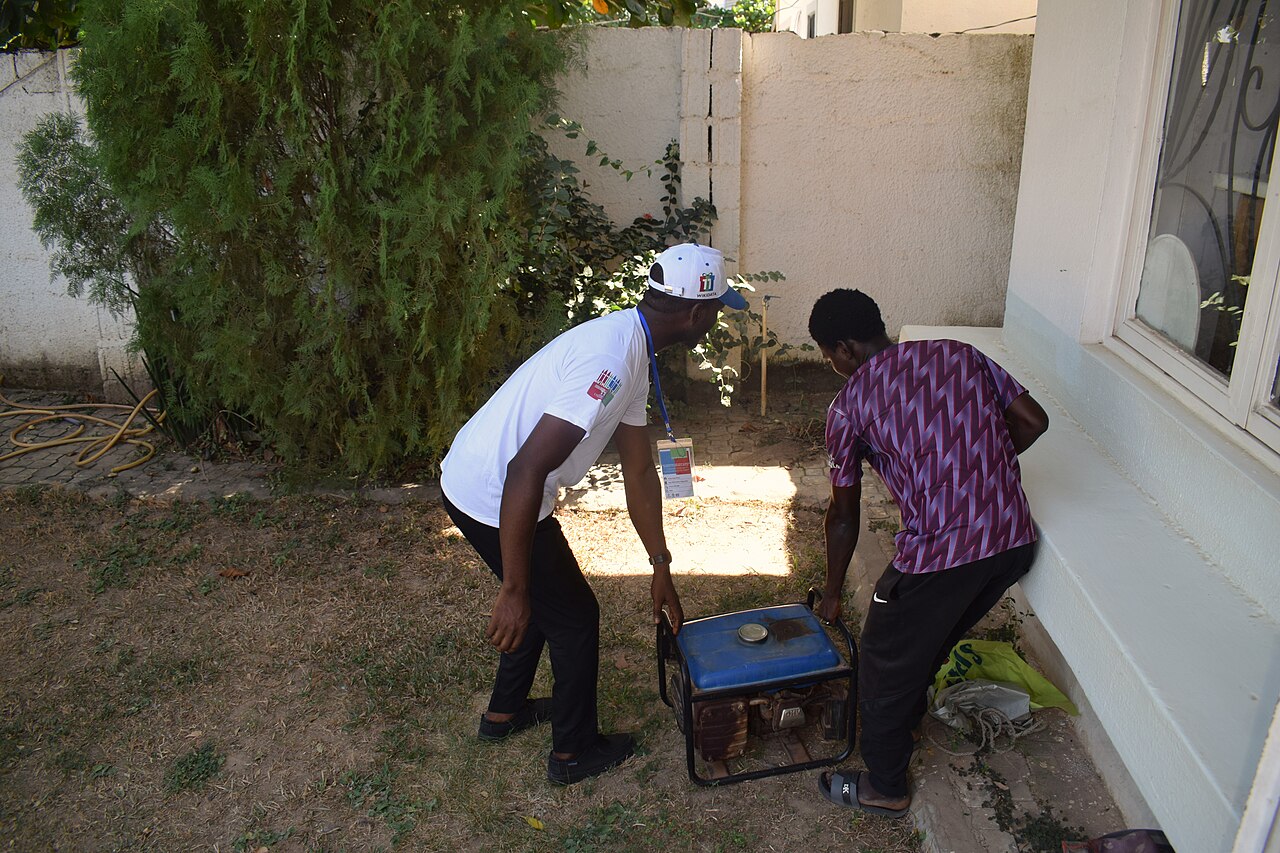
Portable generators still have their place — affordable, no installation, fine for occasional short outages with heavy manual effort. But the differences during a real GTA ice-storm outage are stark: a portable must be hauled out, fueled by hand in storm conditions, manually connected through a transfer device and refilled every eight to twelve hours — all outdoors, at night, in the cold, with carbon-monoxide risk if placed wrong. A standby unit starts itself in seconds, runs on gas for days without attention, works while you're away and keeps sump pumps and freezers alive automatically. Homeowners who've owned both rarely go back; the standby premium buys exactly the scenarios that make portables miserable.
Why Homeowners Choose Bano Electrical Services Ltd
- The licence is ours — ESA/ECRA #7004060 held in-house, not subcontracted; every electrical document on your project carries it.
- Honest sizing — load-calculated recommendations, never oversized to inflate the quote.
- Complete electrical scope — transfer switch, load management, panel integration, permits and inspection.
- Trade coordination — one schedule across electrical, gas and utility work, with referrals we trust.
- 20+ years of GTA panels — generator installs land cleaner when the panel work is done by specialists.
Ready for power that never leaves? Call 416-903-7166 for a free assessment and honest sizing recommendation, or book online. We serve Brampton, Mississauga, Vaughan, Caledon and the entire GTA.