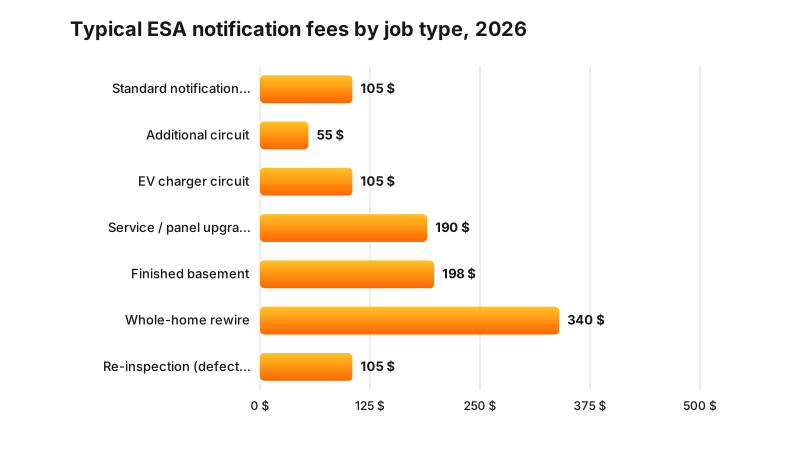
Updated for 2026. An ESA electrical inspection in Ontario starts with a notification of work — typically $100 to $350 in fees depending on the job — and ends with a certificate most homeowners never think about until they sell. Nearly every electrical job beyond swapping a like-for-like fixture legally requires one, and the inspection is what separates professional work from a liability.
When you legally need ESA notification
The short version: almost always. The Electrical Safety Authority requires a notification of work before any new circuit is added, any panel or service is changed, any wiring is extended or replaced, and most device changes beyond simple like-for-like swaps. That covers panel upgrades, pot lights on new circuits, EV chargers, finished basements, hot tubs, generator transfers and rewire work. Two big exceptions exist: routine maintenance (replacing a broken receptacle with the same type in the same box) and, in some cases, work by a homeowner on their own home — though homeowner electrical work still requires notification and inspection. If a contractor tells you a job needs no permit, ask them to put that in writing; they will not, because the obligation sits with them, not you.
What happens during an ESA inspection
The process is simpler than most homeowners expect. Your Licensed Electrical Contractor files the notification, does the work, then requests the inspection. The inspector attends — sometimes same-day, sometimes within a few days for routine residential work — and checks the installation against the Ontario Electrical Safety Code: wire sizing and protection, grounding and bonding, box fill, GFCI and arc-fault protection where required, and clearances around panels. If everything is clean, a certificate of inspection issues. If not, you get a defect notice with a re-inspection window, and correction work is booked.
What ESA inspections cost in 2026
ESA fees are modest next to any real electrical job, and they are worth every dollar because the certificate transfers with the house. The fee schedule is published and updated periodically, so treat these as representative planning numbers and confirm current fees at esasafe.com.
Two timing details worth knowing: the notification is filed before work starts, not after, and it is tied to your address — which is why the certificate of inspection surfaces in a buyer's due diligence years later. That is exactly the point. A modest permit today is documentation that your panel, charger or basement was done to code, and it transfers with the house.
The defects I see most — and how to avoid them
After two decades of GTA inspections, the same handful of defects shows up again and again:
| Common defect | Why it fails | How to avoid it |
|---|---|---|
| Missing GFCI protection near sinks, tubs, exterior | Shock hazard within 1.5 metres of water | Specify GFCI devices at rough-in, not as an afterthought |
| Panel overcrowding, double-tapped breakers | Overheating, damaged bus bars | Correct breaker count and brand match at install |
| Missing bonding jumpers (metal piping, hot tubs) | Energized metal surfaces | Bond everything metal to the system, every time |
| Non-IC pot lights against insulation | Fire risk from heat buildup | Spec IC-rated housings anywhere insulation is present |
| Arc-fault protection missing on living-area circuits | Required under current code | AFCI breakers on new bedroom/living circuits |
Every one of these is avoidable at zero extra cost if the installer simply follows current code. When they appear, it is usually handyman work or a rushed cash job — another reason to hire a Licensed Electrical Contractor whose name goes on the notification.
Failed inspection? Here is how defect correction works
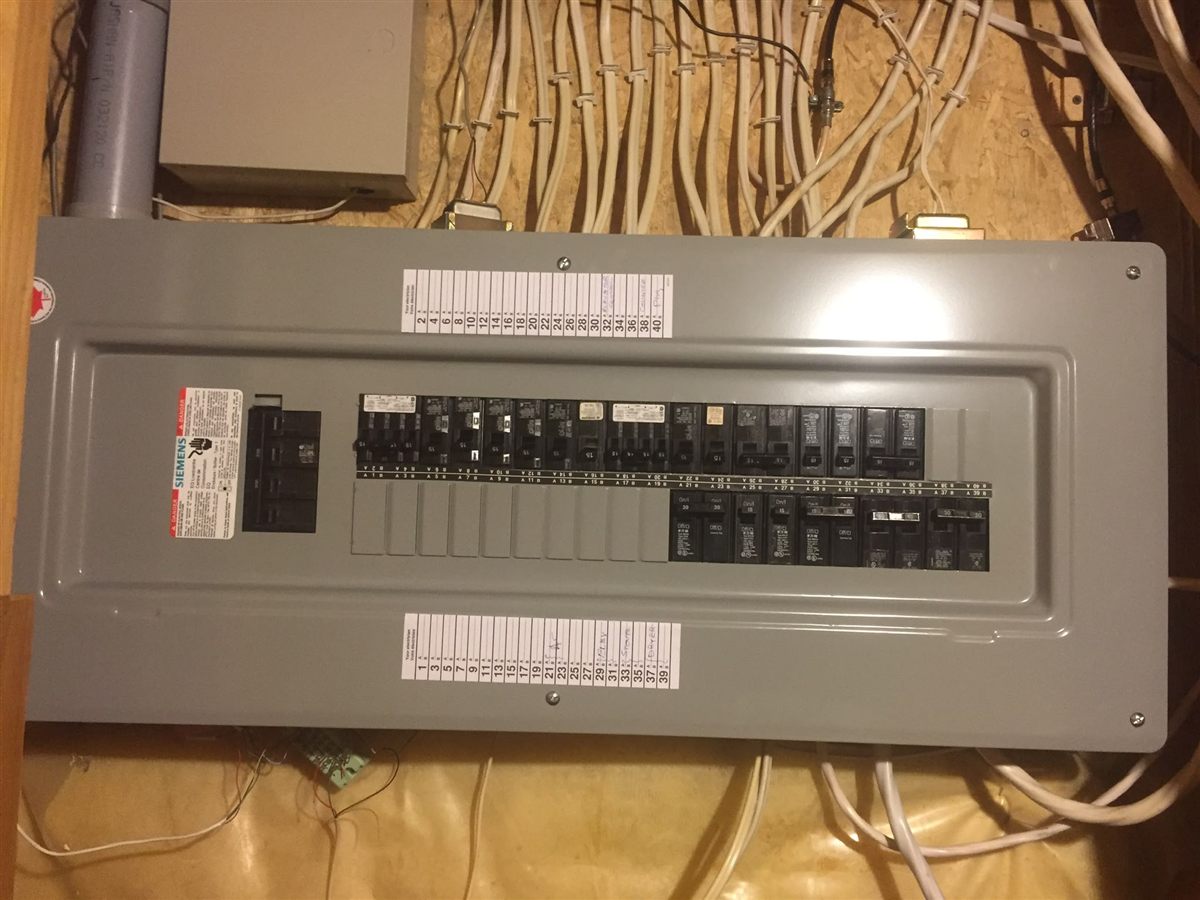
A defect notice is not the disaster homeowners fear. The notice lists each item, and you typically have a window to correct and request re-inspection (usually at a reduced fee). A good contractor corrects defects fast — our ESA defect correction visits are booked as priority because an open defect notice can hold up a sale, an insurance renewal or a closing. If you have inherited someone else's defects — you bought a home with unfinished DIY work — we scope the corrections in writing so you know exactly what the inspector will need to see.
Only Licensed Electrical Contractors can do your work for hire
Ontario law reserves electrical work done for payment to Licensed Electrical Contractors (LECs) — individuals working for a licensed company under the Electricity Act, 1998. The licence number must appear on your quote and invoice; ours is ECRA/ESA #7004060. A handyman without it cannot legally pull your notification, and if something burns, his unlicensed status becomes your insurance problem. This is the single cheapest check a homeowner can make: ask for the ECRA number before anyone opens your panel.
Sources
- Electrical Safety Authority (ESA) — notification of work, published fee schedule and inspection process.
- Ontario Electrical Safety Code — the standard every inspection is judged against.
- Electricity Act, 1998 — the Ontario law governing electrical licensing and inspections.
Questions homeowners ask me about ESA inspections
Can I do electrical work myself and get it inspected?
Ontario allows homeowners to do electrical work on their own home, but you must still file a notification of work with ESA and pass inspection. The savings evaporate fast if defects force re-inspections, and some insurers treat homeowner electrical work cautiously. For anything beyond a simple device swap, the economics usually favour hiring a licensed contractor.
How long does an ESA inspection take?
Thirty minutes to an hour for a typical residential inspection. Scheduling is the variable — routine jobs are usually inspected within days. We book inspections so homeowners do not wait around; our electrical safety inspections include the ESA filing as standard.
What happens if I skip the permit?
Work without notification can be ordered corrected or removed, and ESA can require an inspection of concealed wiring — meaning drywall comes down at your expense. At resale, unpermitted work surfaces in buyer inspections and either delays closing or costs you a price reduction. The permit is the cheap option, every time.
Does an ESA certificate matter when selling my house?
Increasingly, yes. GTA buyers' inspectors routinely ask for permits and certificates on panel work, finished basements and renovations. A folder of ESA certificates is one of the cheapest negotiating tools a seller can hold, and it answers the buyer's lawyer before the question is asked.
Who books the inspection — me or the electrician?
The Licensed Electrical Contractor files the notification and books the inspection; that paperwork is part of what you are paying for. We handle permits across Brampton, Toronto and the whole GTA. Free estimates and honest defect assessments — call 416-903-7166.