"How much do you charge per hour?" It's the first question on almost every service call we take, and most homeowners asking it have already been burned by vague answers: "it depends," "we'll see when we get there," or a quote that doubles by day two. So let me answer it the way I'd want it answered if I were hiring someone to work on my own home. Here's what licensed electricians actually charge across Brampton and the GTA — Updated for 2026.
What Ontario electricians charge per hour in 2026
| Who's doing the work | Typical GTA hourly rate (CAD) |
|---|---|
| Apprentice (working under a licensed electrician) | $60 – $90 |
| Journeyperson electrician | $90 – $140 |
| Master Electrician | $140 – $200 |
| Service call / first-hour minimum | $150 – $250 |
| After-hours or emergency rate | Base rate plus 50% – 100% |
Notice the gap between what electricians earn and what they bill. The average licensed electrician in Ontario earns around $40 an hour in wages — the billed rate covers the van and fuel, WSIB, $2-million liability insurance, ECRA licensing, tool replacement, dispatch, and the office that answers your call at 7 a.m. when a breaker won't reset. A legitimate $120 hourly rate is not a $40 wage plus greed; it's what a compliant, insured electrical business costs to run in the GTA in 2026.
What common jobs actually cost (flat-rate pricing)
For defined jobs, most reputable contractors quote a flat price, not an open-ended meter. These are honest 2026 ranges for the work we price weekly:
| Job | Typical flat price (GTA, 2026) |
|---|---|
| Standard outlet or switch replacement | $150 – $300 |
| GFCI outlet installation | $180 – $350 |
| Pot light, retrofit per fixture | $150 – $250 |
| Chandelier / light fixture swap | $200 – $500 |
| Ceiling fan installation | $200 – $450 |
| EV charger, Level 2 installed | $1,200 – $2,500 |
| 100A → 200A panel upgrade | $2,500 – $5,500 |
| ESA notification & inspection fees | $200 – $450 |
Flat pricing protects you: the risk of a job running long sits with the contractor, not your invoice. If your outlet installation hits a damaged box or knob-and-tube surprise behind the drywall, an hourly job gets expensive fast; a flat quote absorbs it.
Why GTA rates sit above the Ontario average
You'll see Ontario averages quoted around $100–$160 an hour. The GTA — Brampton, Mississauga, Vaughan, Toronto — runs toward the top of that range for structural reasons: commercial insurance and fuel cost more here, skilled labour is tighter, and the housing stock itself is harder to work on. A 1950s Brampton semi with plaster lath and crowded joist bays takes longer to fish a wire through than a new build in a smaller market with open stud walls. The rate isn't just for hands on the truck; it's for the difficulty of the territory.
Seven factors that move the price
Two homes can ask for the "same" job and get quotes $400 apart, legitimately. Here's what actually moves the number:
- Access. An unfinished-basement panel takes an hour; a panel behind a finished wall or a fixture above a two-storey foyer adds scaffolding and time.
- Age and condition of the wiring. Aluminum branch wiring, knob-and-tube, or a fuse panel adds safety steps before the visible work can even begin.
- Materials quality. A $12 fixture and a $120 fixture both install in the same time; the difference is on your invoice as a line item, not hidden in labour.
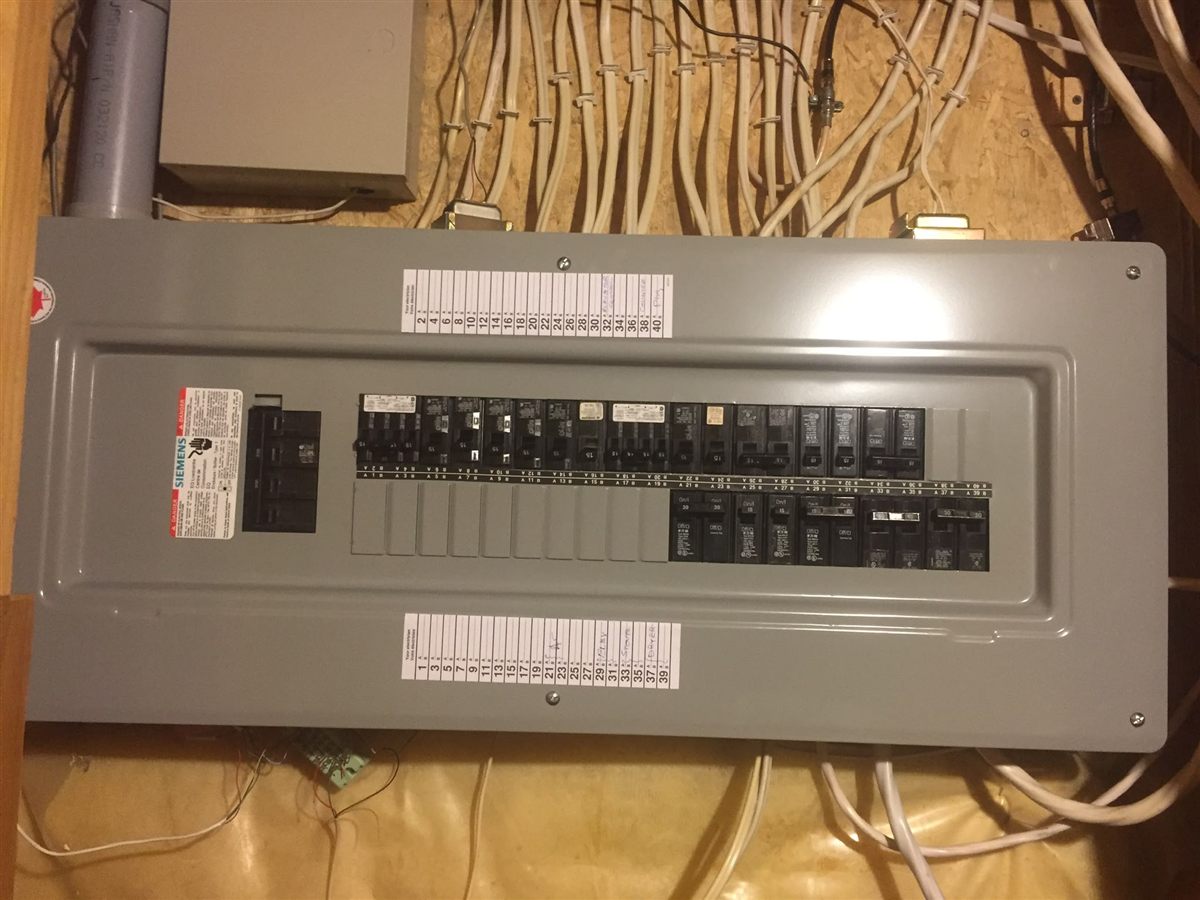
- Panel capacity. If the load calculation shows no spare capacity, adding a circuit becomes a panel conversation — which is why our service upgrade assessments check it first.
- Permits. New circuits and service work need ESA notification and inspection; the fees are real and they're listed separately on honest quotes.
- Timing. Evening, weekend and emergency calls carry a premium because someone is being pulled off a booked job or off the on-call rotation.
- Diagnosis. Finding a fault behind finished walls is skilled detective work; expect it priced hourly rather than flat.
Hourly vs flat rate: which should you prefer?
Match the pricing model to the job. Known scope — a fixture, an outlet, a defined run of pot lights — deserves a flat price, and you should insist on one. Unknown scope — "half the upstairs outlets just died" — deserves hourly, because nobody can honestly flat-price a mystery. The professional middle ground we use: diagnose at the hourly rate, then convert to a written flat quote once we know what's wrong, so you're never watching a meter on an open-ended job.
The permit line item: ESA fees, explained
Every quote we issue that involves new circuits, service changes, or significant rewiring carries an ESA line: typically $200–$450 for notification of work and inspection, depending on scope. Only a licensed electrical contractor holding an ECRA licence can file it — ours is ECRA #7004060 — and the inspection produces a Certificate of Acceptance your insurer and a future buyer can verify. I've written before about what happens when unpermitted work surfaces later: it becomes an ESA defect correction job, usually discovered at the worst possible moment, with the homeowner paying to redo what was already paid for once.
Why the cheapest quote usually costs more
Every experienced electrician has cleaned up a "cheap job." The pattern is identical each time: no ECRA licence (you can verify any Ontario contractor free on the ESA website), no WSIB or liability insurance, no permit, and materials from the discount bin. The homeowner saves maybe $200 up front — then pays it back with interest: a denied insurance claim after a fire, a home-inspector flag that renegotiates a sale price by thousands, or a full redo when the work fails. Cheapest and lowest-cost are different things. Lowest-cost is the job done once, permitted, insured, and documented.
How to keep your bill honest
Four habits that genuinely save money, none of which involve hiring the lowest bidder:
- Bundle jobs. The service call is a fixed cost — add the second outlet, the third pot light, the dimmer, all in one visit. Each additional item costs far less than a second trip.
- Rough in during renovation. Wiring a basement or kitchen before drywall costs roughly half what retrofitting through finished ceilings does. If a reno is planned, call your electrician before the drywall, not after.
- Describe the job accurately. Photos of the panel label, the fixture, and the problem area let us quote firmly instead of carrying "unknown" padding.
- Schedule non-urgent work midweek. Booking Tuesday for a job that can wait beats paying the weekend premium for one that can't.
Questions homeowners ask me
Do electricians charge a service call fee in Ontario?
Most licensed contractors do, and it's usually the first-hour minimum of $150–$250. It covers the truck roll, fuel, and the first stretch of on-site time. Be wary of anyone advertising "no service call fee" — the cost doesn't disappear, it just hides in an inflated hourly rate or gets discovered mid-job.
Is it cheaper to hire a handyman instead of an electrician?
Up front, sometimes; in total, almost never. Electrical work in Ontario must be done by or under a licensed electrical contractor, and insurance companies treat unlicensed work as a reason to deny claims. I've been called in to fix handyman wiring where the correction cost more than the original professional quote would have — before counting the risk.
Why did my quote change after work started?
Usually because something was hidden: aluminum wiring behind a device, a corroded mast, or a junction buried in insulation. A professional documents these finds with photos and explains the change before proceeding — that's the standard you should hold. Our quotes state clearly what assumptions they're built on, so surprises are rare and never silent.
Do you charge for estimates?
For standard residential work — fixtures, outlets, pot lights, EV chargers — our estimates are free and firm. For fault-finding or larger projects, we may charge a diagnostic visit credited toward the work, because real diagnosis takes real time. Either way, you'll know before anyone drives to you.
How do I verify an electrician is licensed in Ontario?
Ask for their ECRA licence number and check it on the Electrical Safety Authority's website — it takes under a minute and confirms the licence is active and in good standing. Ours is ECRA #7004060, and any legitimate contractor will give you theirs without hesitation. Hesitation is your answer.
The bottom line
In 2026, expect $90–$140 an hour for a journeyperson and $140–$200 for a Master Electrician across the GTA, with flat pricing for defined jobs and permits listed honestly on the invoice. The number to optimize for isn't the lowest quote — it's the job done once, by someone whose licence, insurance and inspection certificate you can hold in your hand. If you want a firm, itemized quote on anything electrical, call 416-903-7166 — the estimate is free and the price we quote is the price you pay.